Ping-Pong & Domino, Bertrand Lavier & Mathieu Mercier
25.04 – 30.05.26
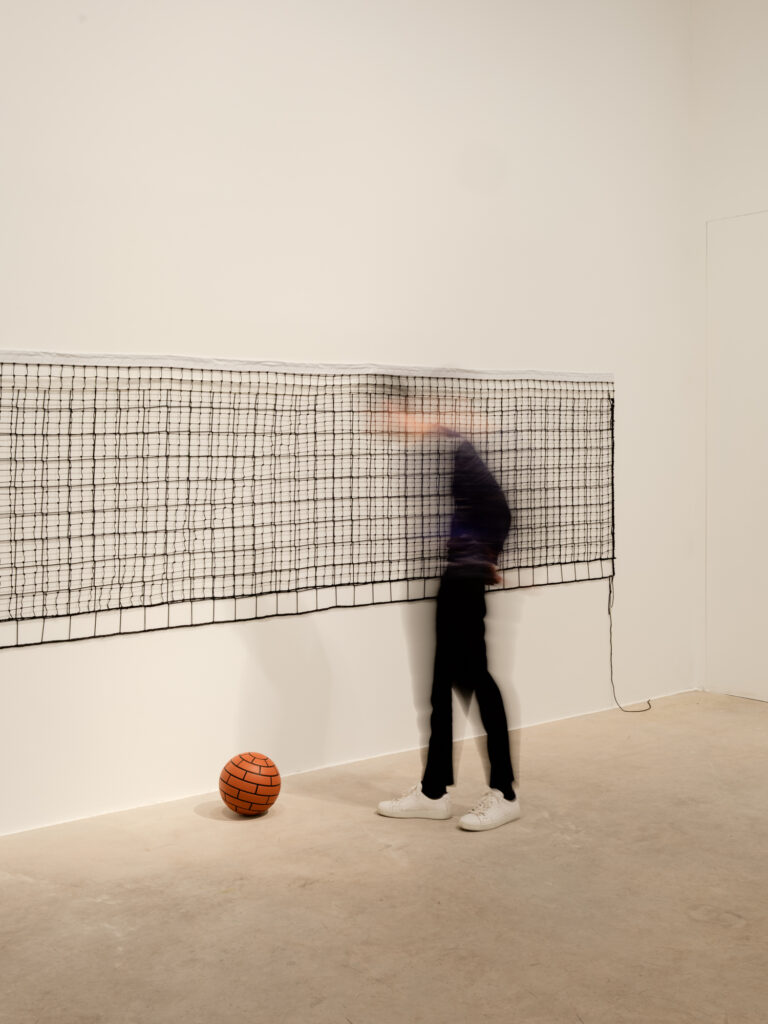
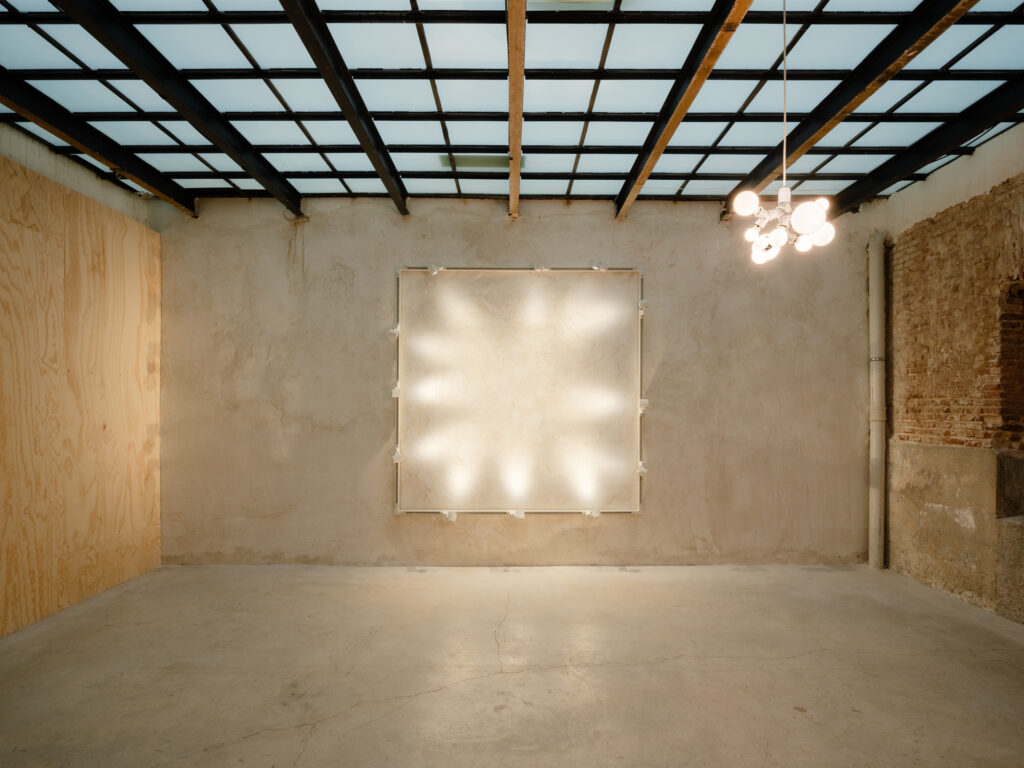
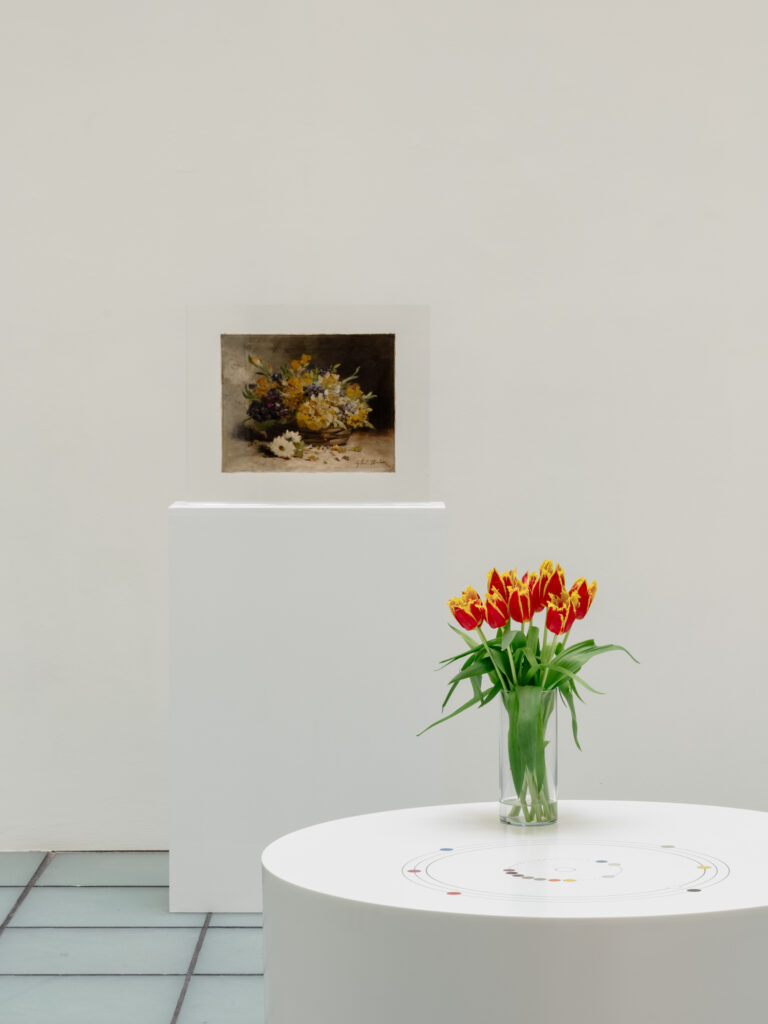
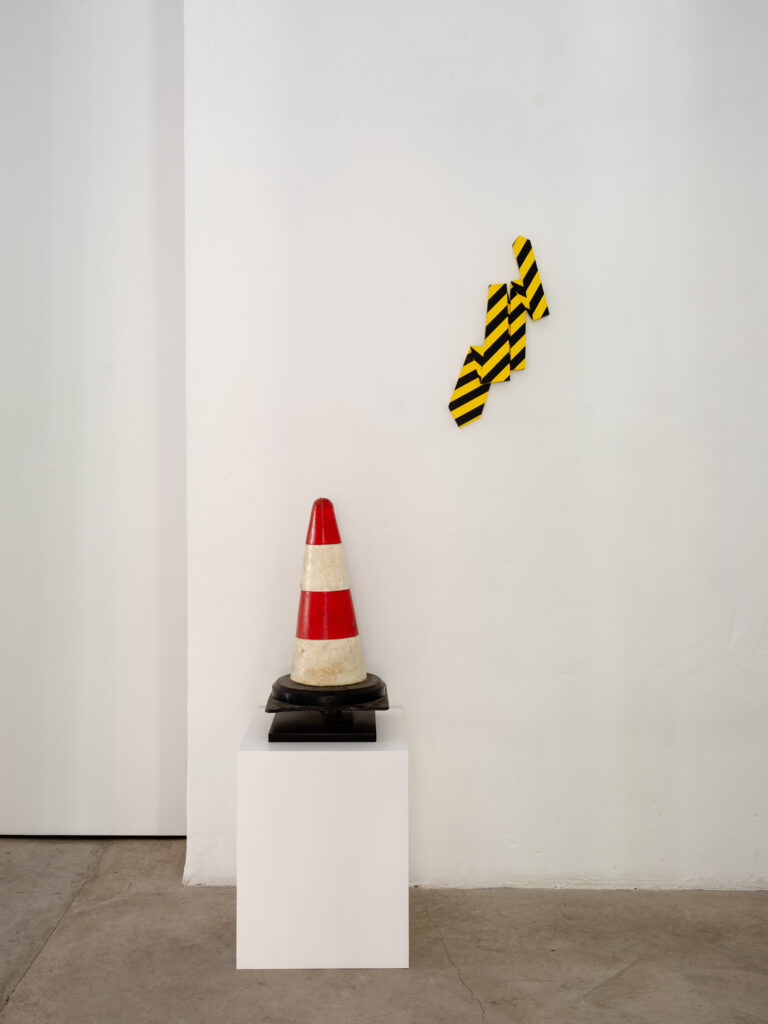
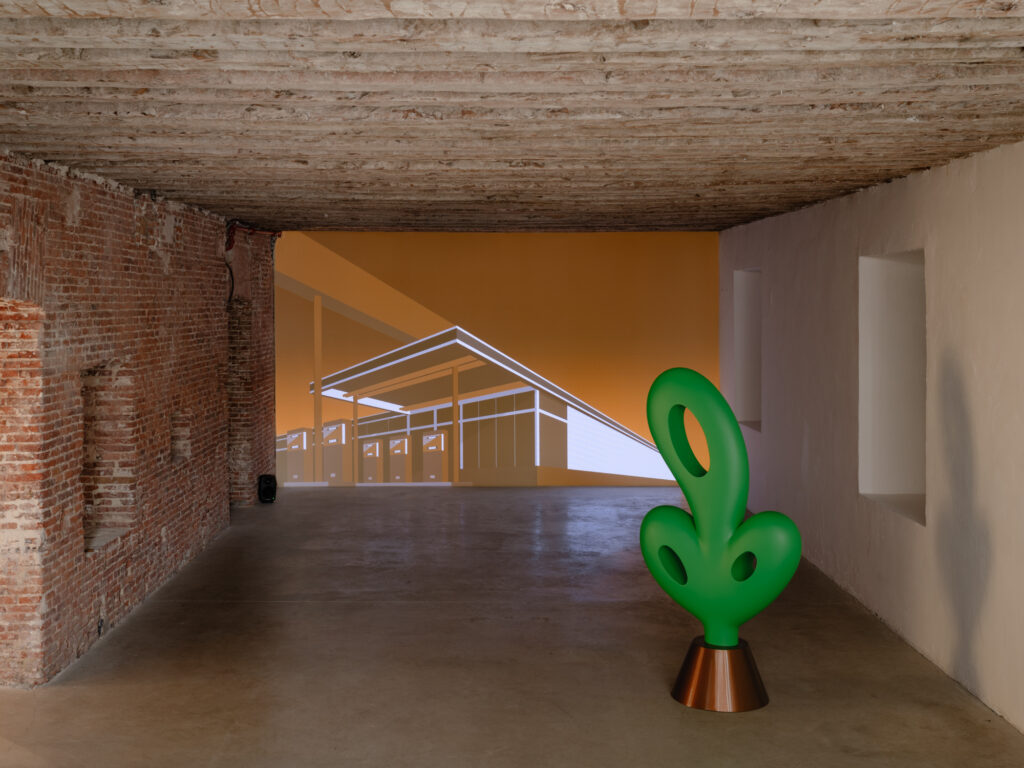
Albarrán Bourdais presents Ping-Pong & Domino, a joint exhibition by Bertrand Lavier and Mathieu Mercier, bringing together two key figures of contemporary French art in a dialogue around the status of the object, systems of representation, and the legacy of modernism.
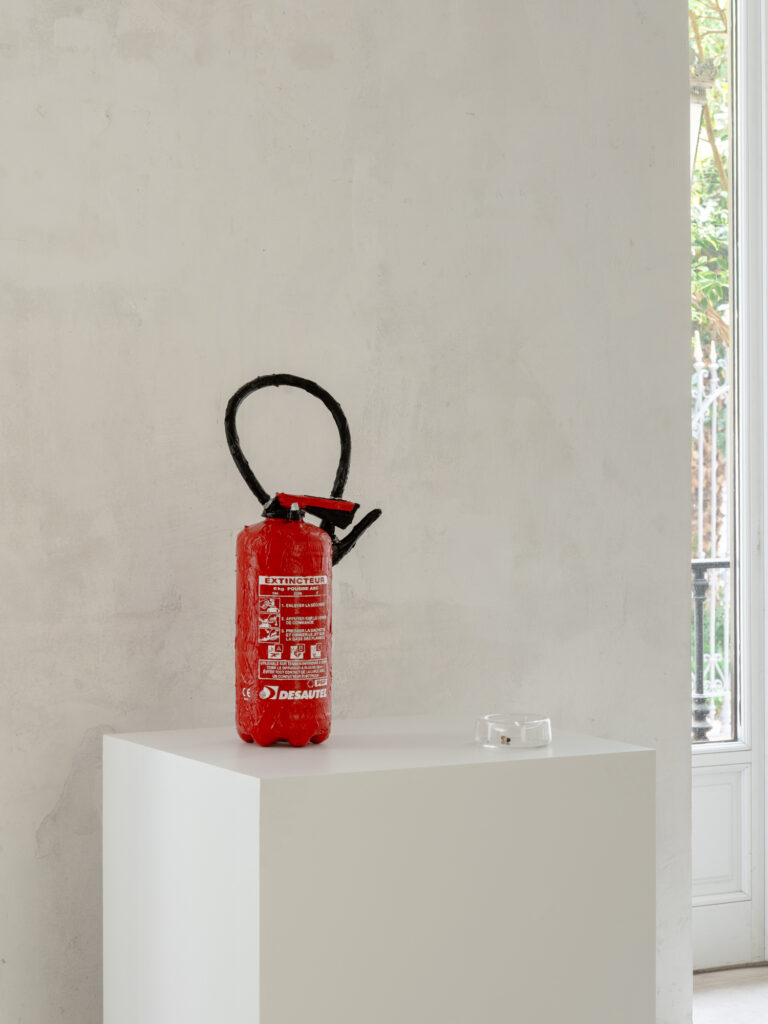
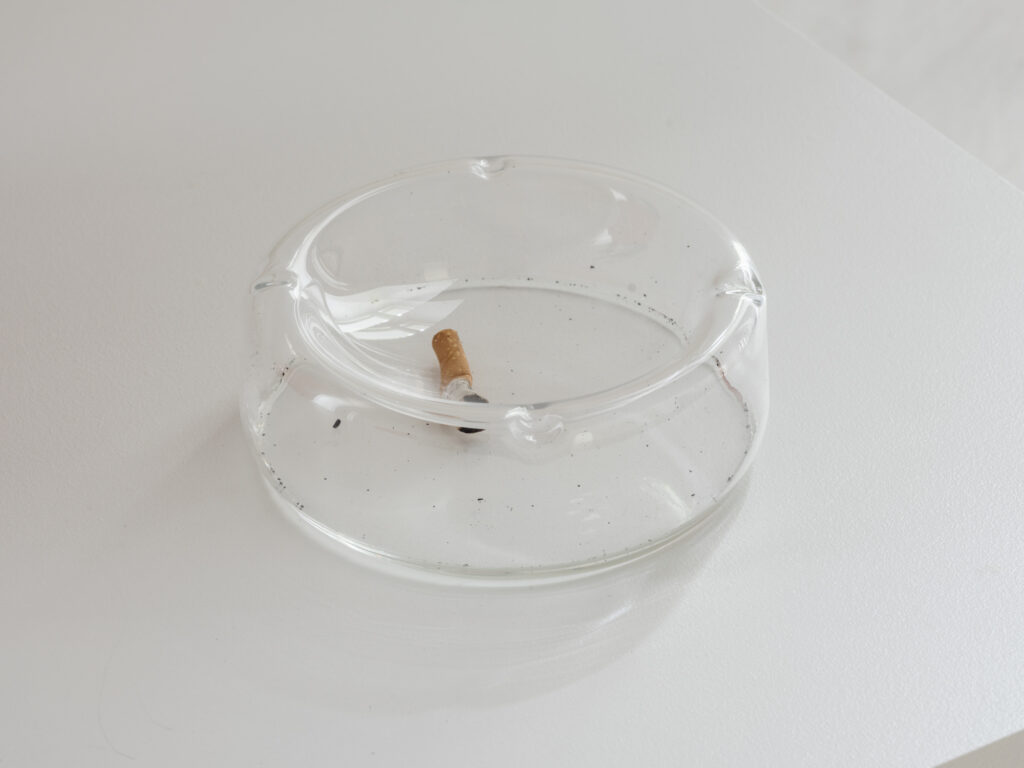
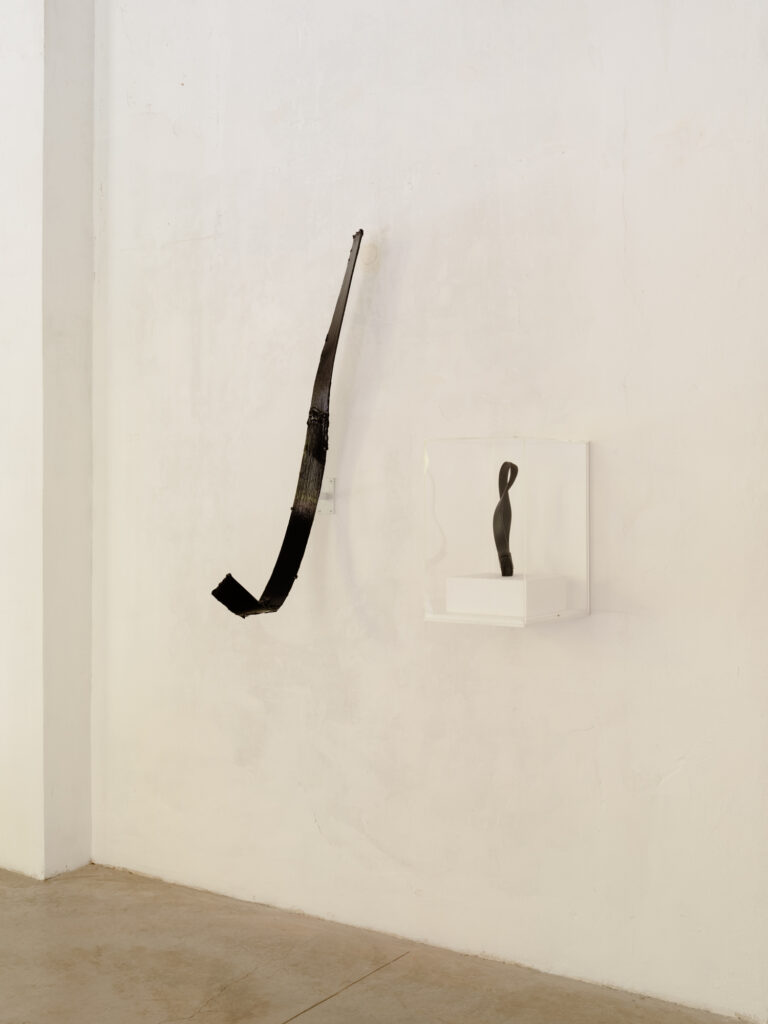
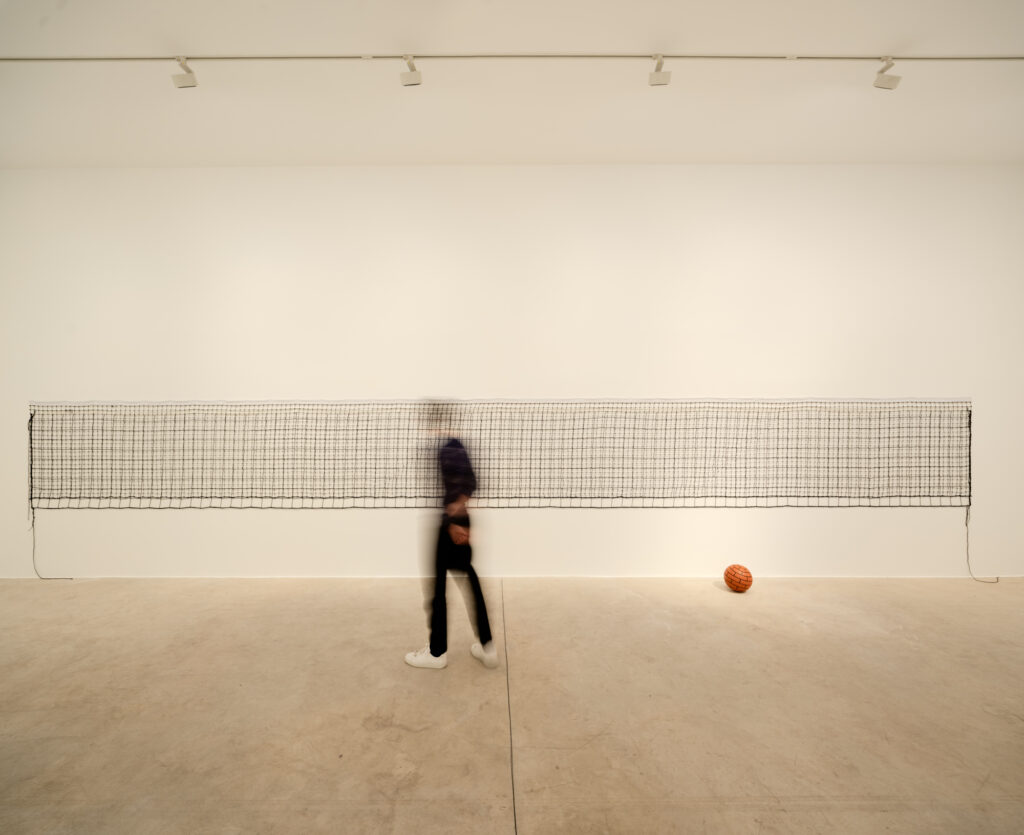
Through distinct yet deeply aligned formal languages, both artists have developed practices that question the hierarchies that determine the value and meaning of objects. Between art and everyday life, their works operate through shifts, appropriations, and reconfigurations that destabilize traditional categories, placing the object within a field of tension between functionality, representation, and aesthetic autonomy.
The exhibition revisits the exchange initiated in 2018 at the Massimo Minini gallery, reactivating an artistic dialogue that unfolds here as an open system of correspondences. This principle not only shapes the conceptual framework of the project, but also its spatial arrangement: the works are presented in pairs, creating a journey based on relationships, contrasts, and affinities that invite an active reading on the part of the viewer.
The title Ping-Pong & Domino alludes to different modes of play and association—the rebound, the question, the chain reaction—that structure the exhibition’s internal logic. Each encounter between works poses an open conversation, while the succession of these relationships produces a domino effect in which meanings are linked, displaced, and transformed throughout the course of the exhibition.
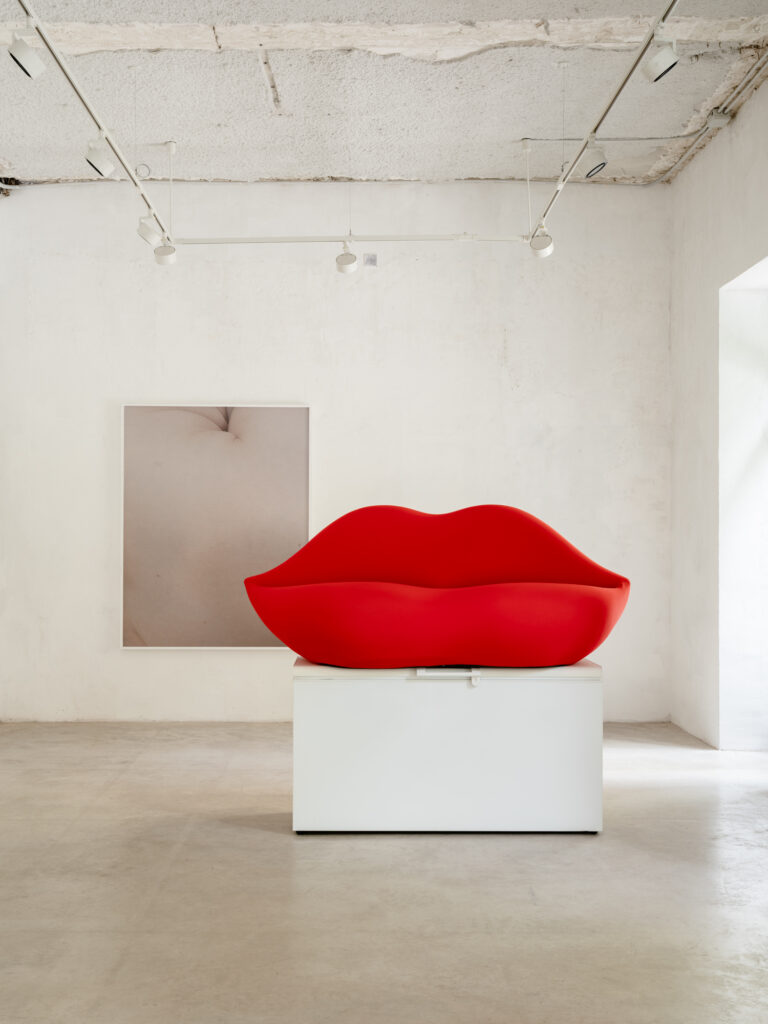
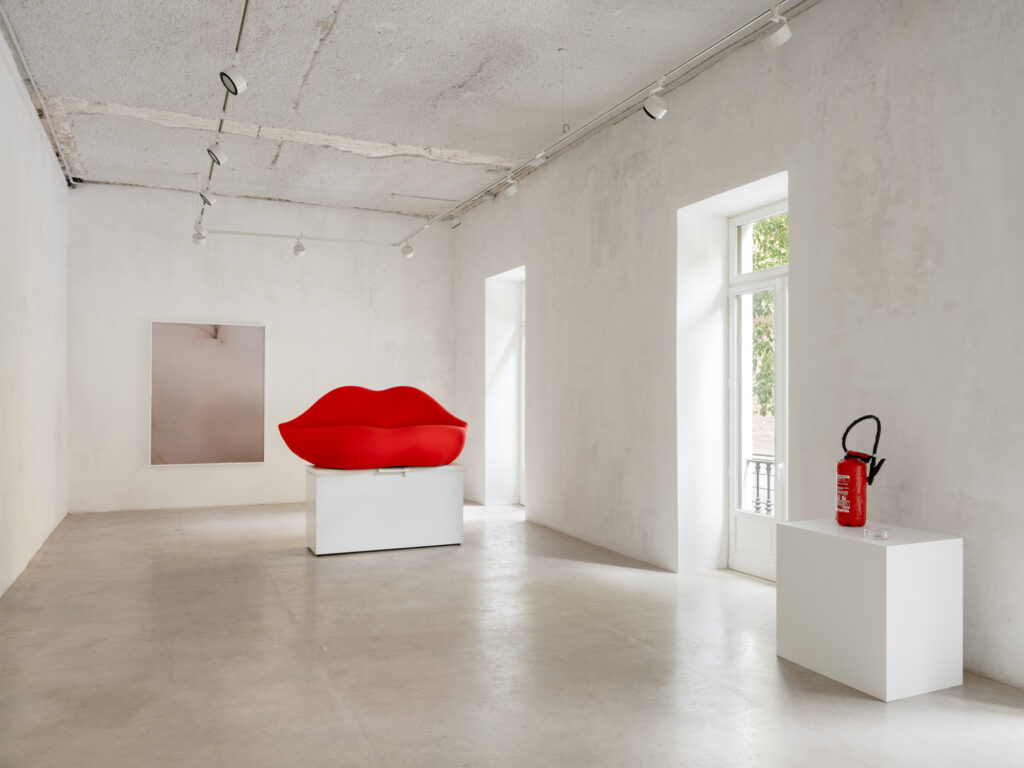
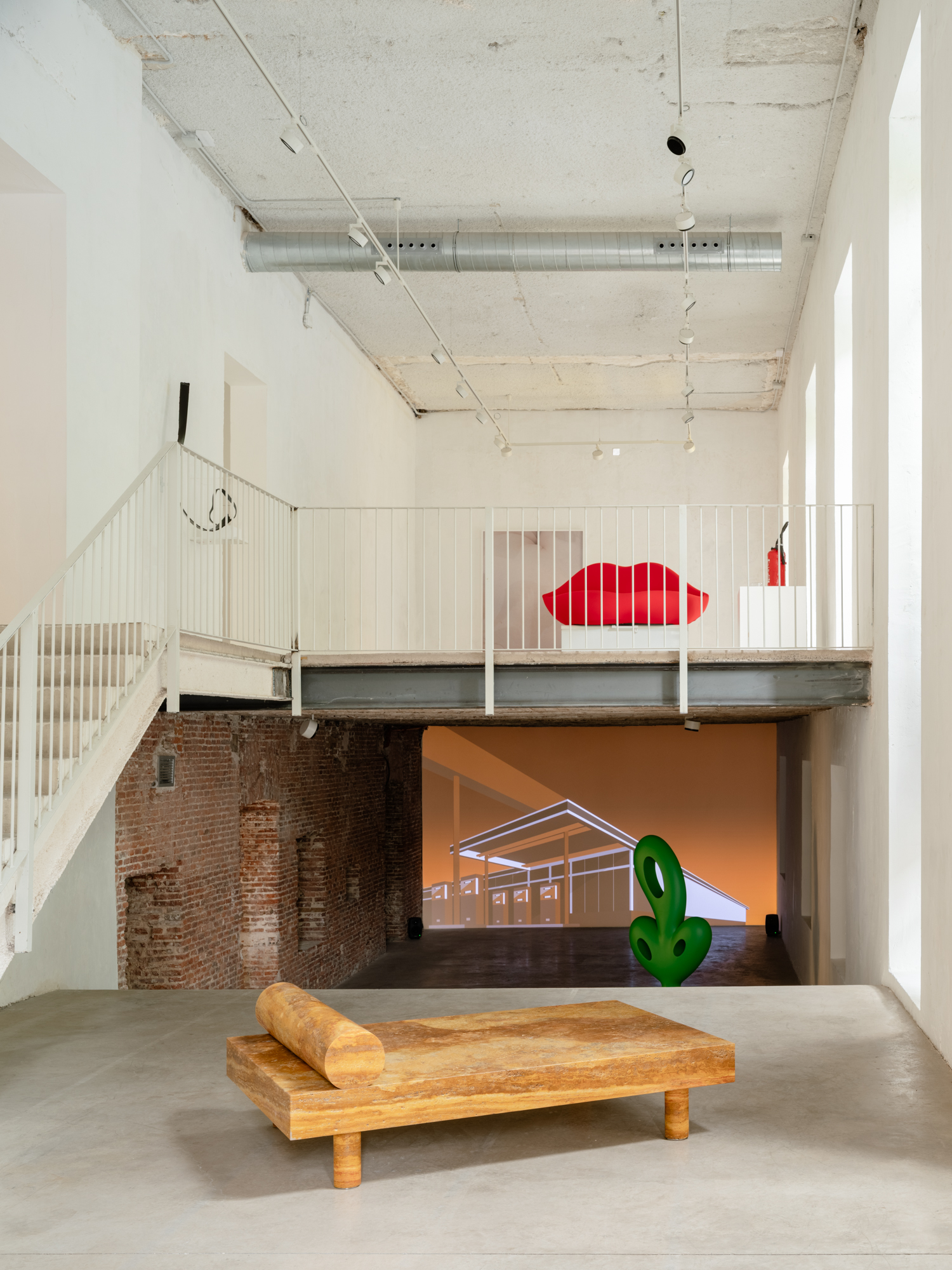
Among the works presented, Bertrand Lavier’s iconic piece Bocca—the red lips-shaped sofa designed by Studio 65, drawing on the iconography of Salvador Dalí—appears integrated into one of his characteristic assemblages of “superimposed objects.” In these works, Lavier combines unaltered consumer artifacts—such as refrigerators, freezers, or sofas—to generate unexpected associations that function as true visual equations. Far from arbitrary, these superpositions follow a precise alignment of form, scale, proportion, and color, placing the realms of the everyday object and the artwork on the same plane.
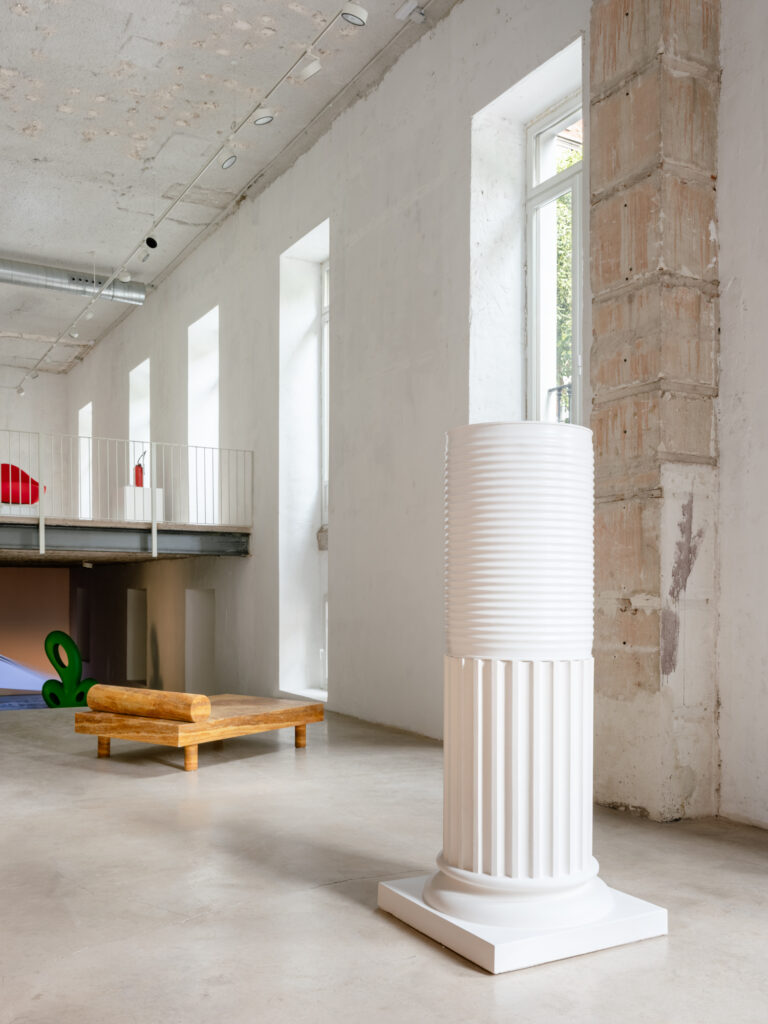
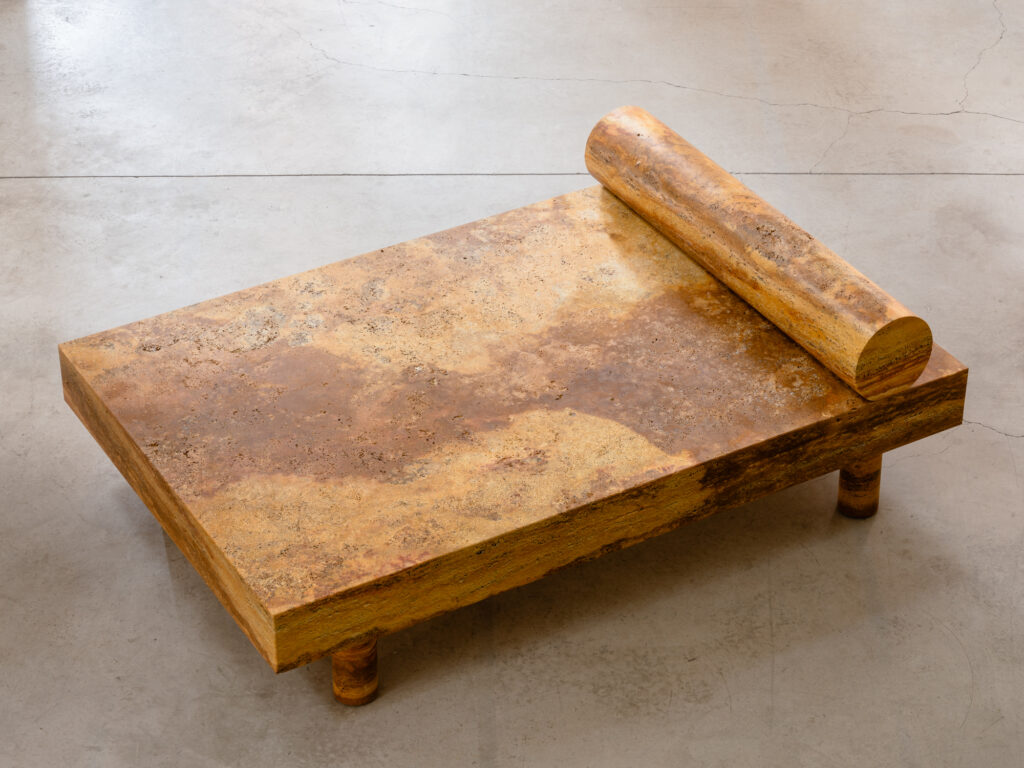
For his part, Mathieu Mercier’s Last Day Bed introduces a radically different presence. Carved in marble, the piece recalls the modern daybed associated with Mies van der Rohe, evoking both the history of design and the tradition of minimalist sculpture. Yet this reference is displaced by a fundamental ambiguity: the work oscillates between bed, psychoanalytic couch, and tomb. This “monumental piece of furniture,” charged with both physical and symbolic weight, transforms a familiar object into a space of mental projection, where ideas of rest, desire, memory, and finitude intersect.
In both cases, albeit through different strategies, the artists activate a displacement of the object that calls its function and meaning into question. Through appropriations, minimal transformations, or unexpected associations, Lavier and Mercier situate the everyday within an unstable territory, where the categories of use, representation, and value become permeable.
In this context, Bertrand Lavier’s work—known for its operations of superimposition and displacement—enters into resonance with that of Mathieu Mercier, whose practice has focused on the languages of design, modernity, and their codes. If Lavier constructs a kind of visual encyclopedia from existing objects, Mercier interrogates the systems that organize our relationship to them, placing them in an intermediate space between function and form, industry and art.