EVERYTHING UNDER THE SUN?
January 17 – February 21, 2026
For his first exhibition at Albarrán Bourdais—one year after the major retrospective devoted to his work at MACBA—Jordi Colomer presents a new body of work that deepens his ongoing investigation of the city as a space of social, political, and symbolic projection. Through sculptures, videos, drawings, and collages, the artist unfolds a series of devices that reactivate some of his recurring concerns: the notions of utopia and dystopia, their capacity to imagine “spaces of the future,” and the ways in which we inhabit them.
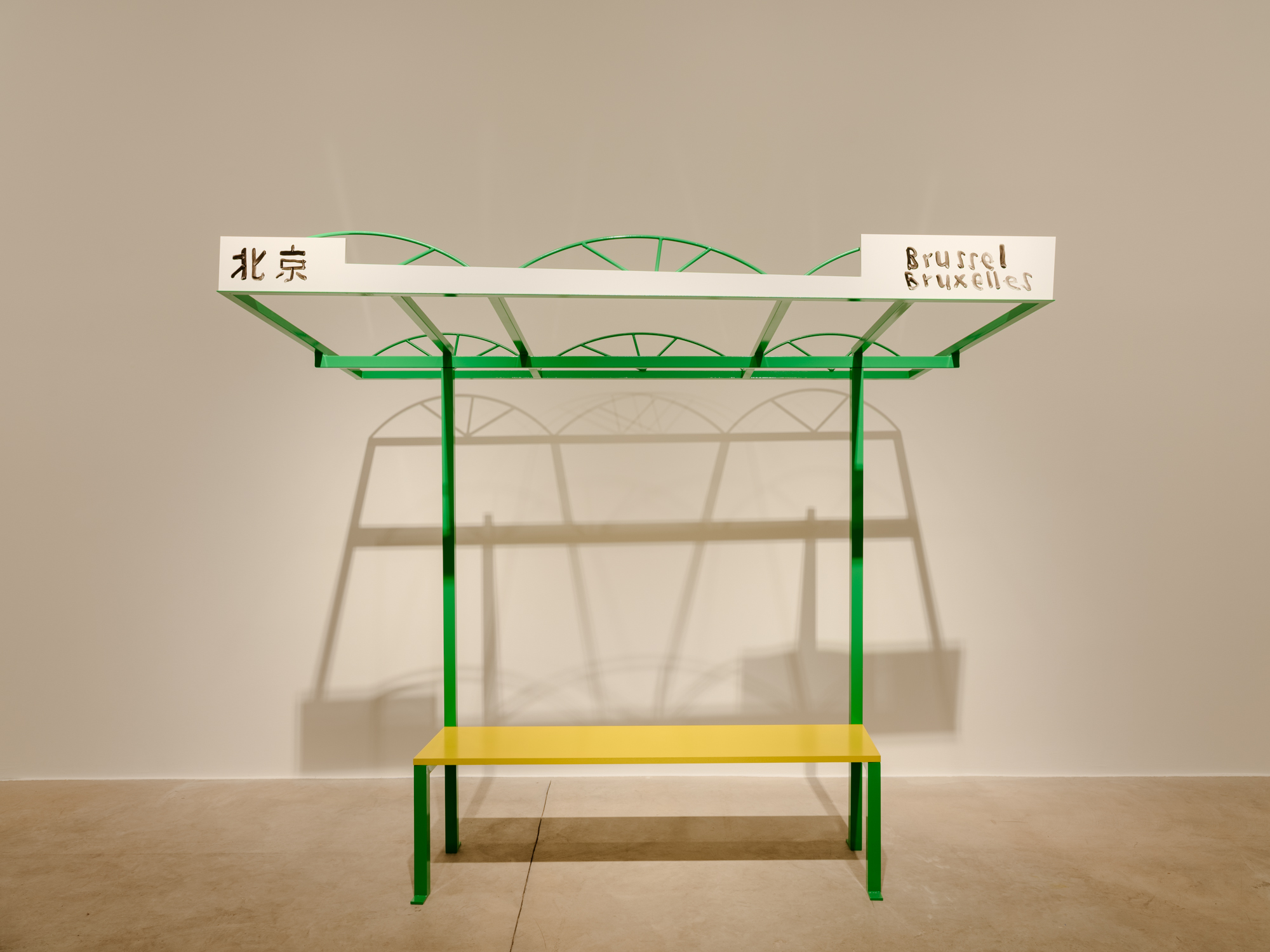
The exhibition takes as its point of departure Colomer’s fascination with the Linear City project conceived by Arturo Soria, and in particular with a quotation drawn from the project’s first public presentation, in which the architect envisioned a city of the future whose endpoints could be Cádiz and Saint Petersburg, or Beijing and Brussels.
“…such will be the city of the future: a single street 500 meters wide, whose ends may be Cádiz and Saint Petersburg, or Beijing and Brussels.”
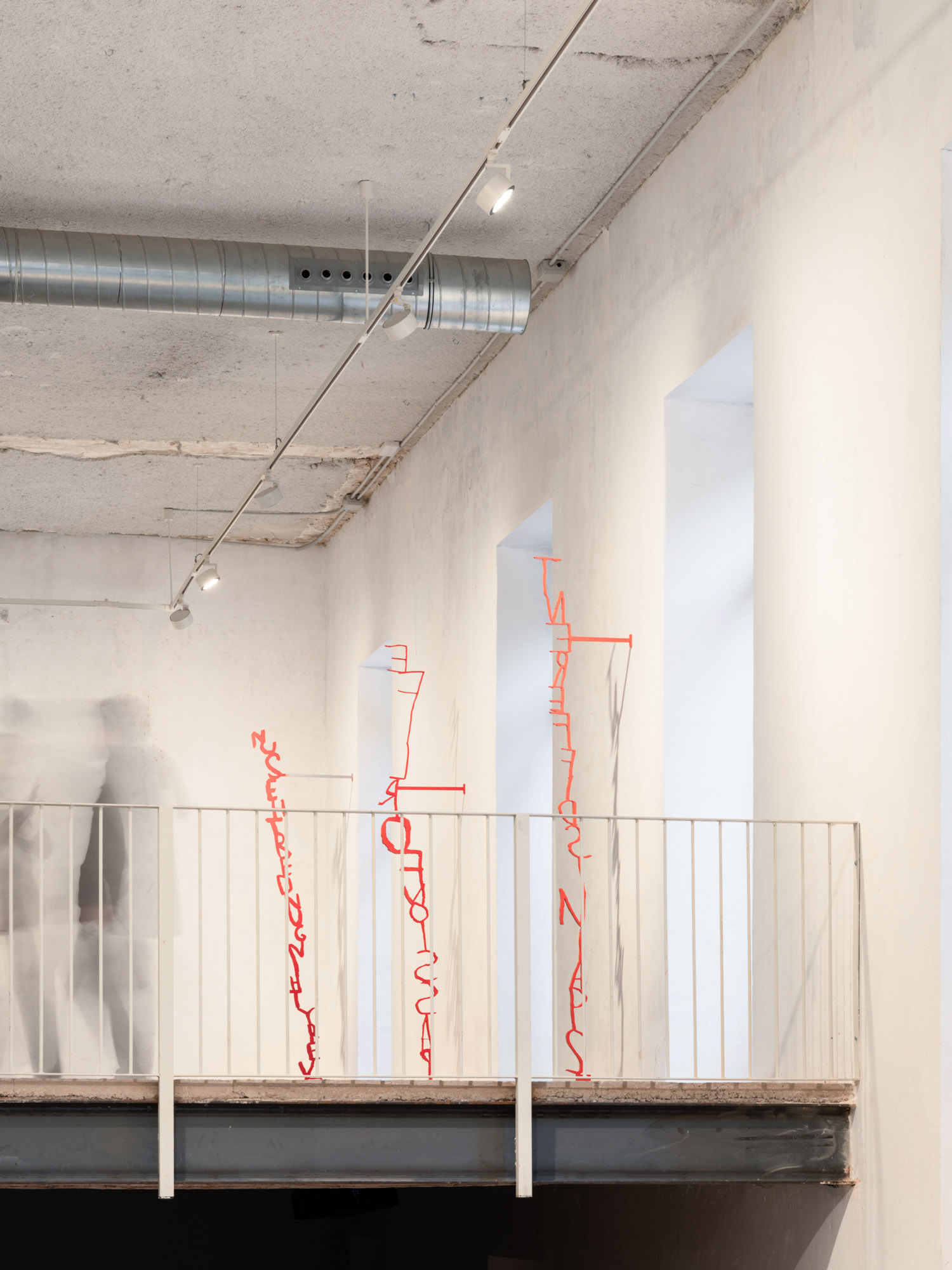
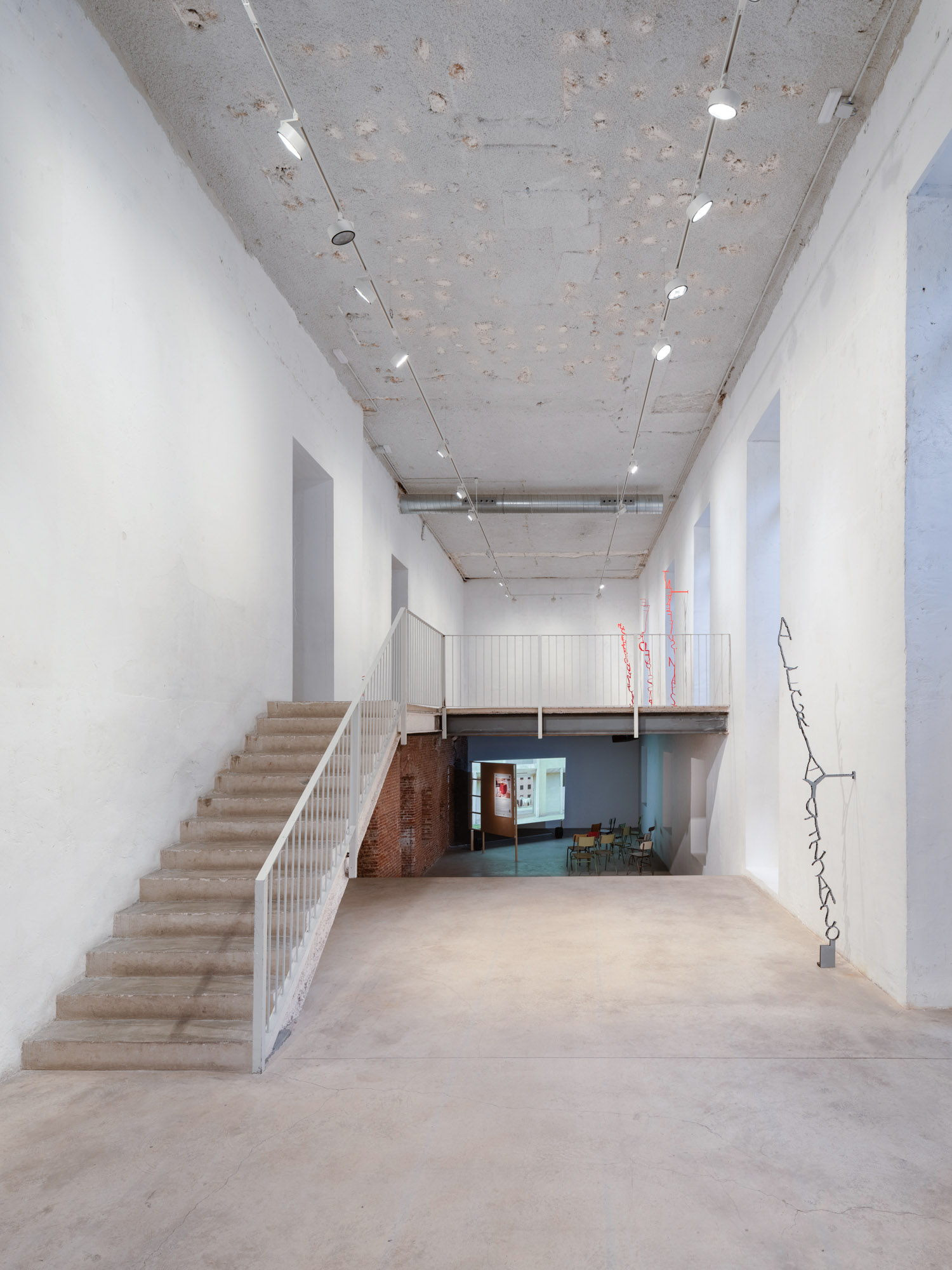
Drawing on this premonition of global scope, Jordi Colomer articulates a series of works that function as fragmentary maps, in which names, languages, alphabets, and systems of signage accumulate. These unstable cartographies claim their own space, where identities and territories blur, giving rise to an open, mobile, and ambiguous geography.
These cartographies enter into dialogue with a precarious, life-size bus stop painted in bright colors, inviting the viewer to temporarily inhabit a specific point within this imagined linear city. Symbolically located somewhere between Beijing and Brussels, the structure proposes a space of waiting—unlocatable on the map—a remote site of encounter with the other, a shared and ephemeral place within the public realm.
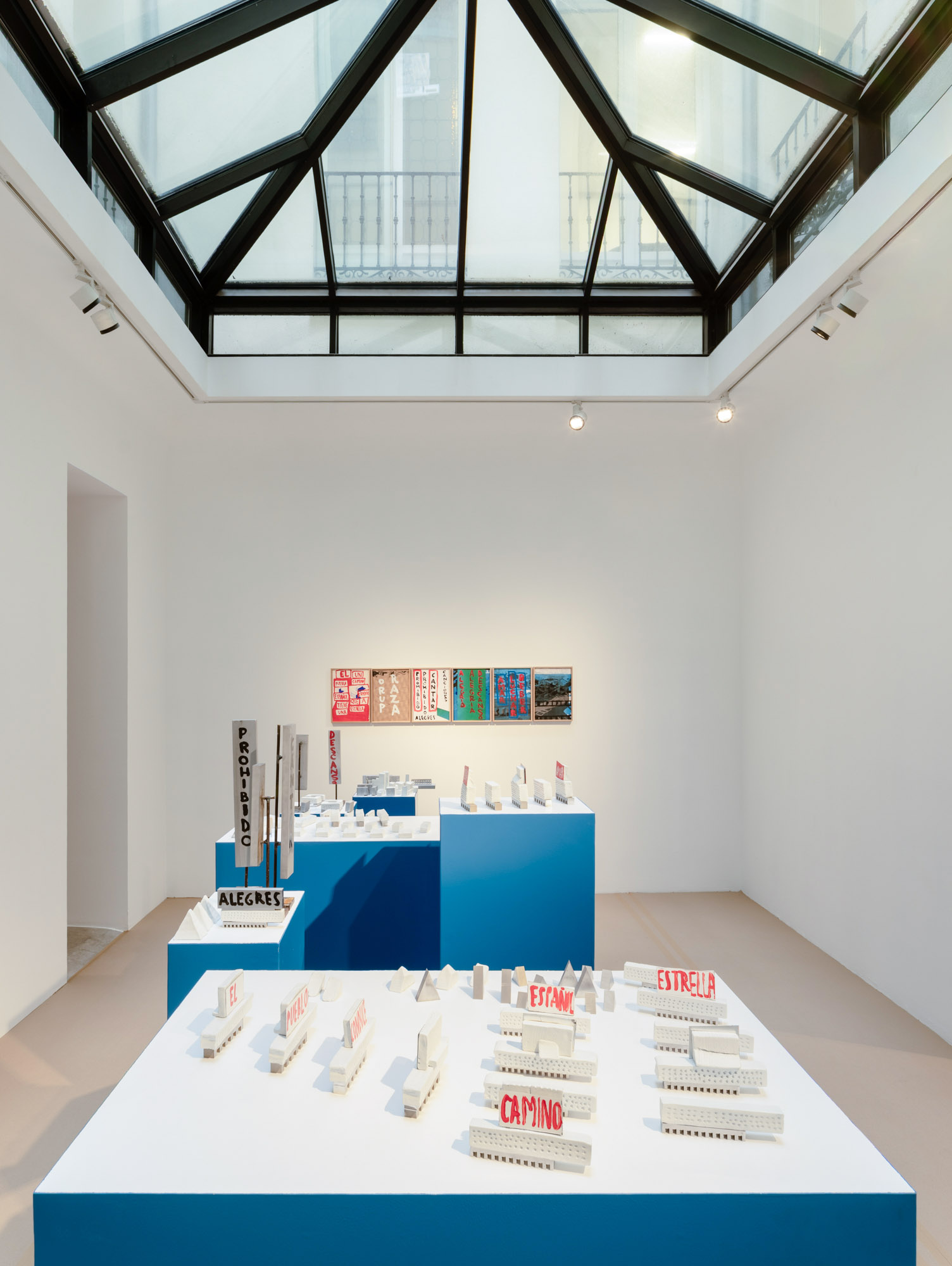
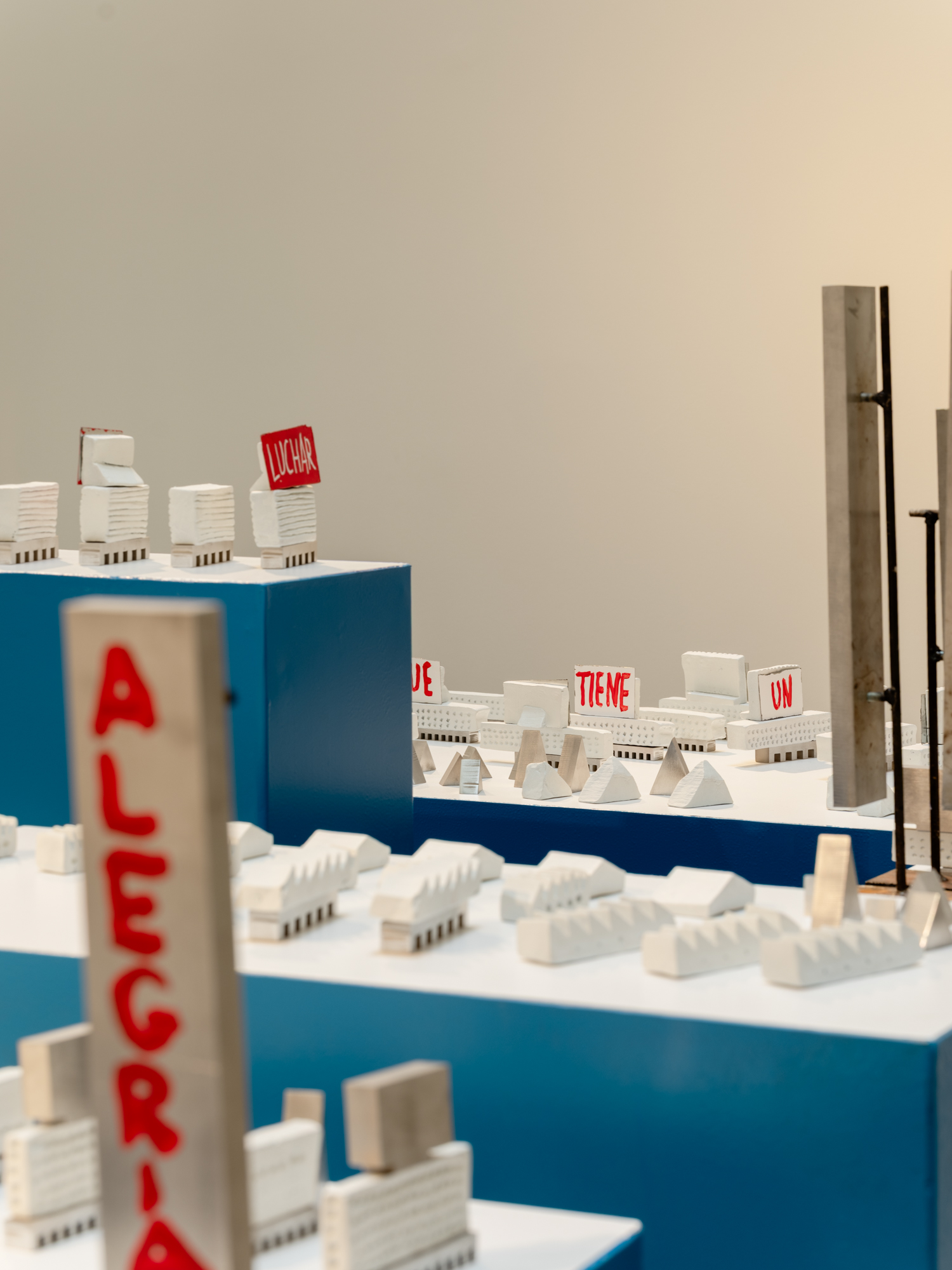
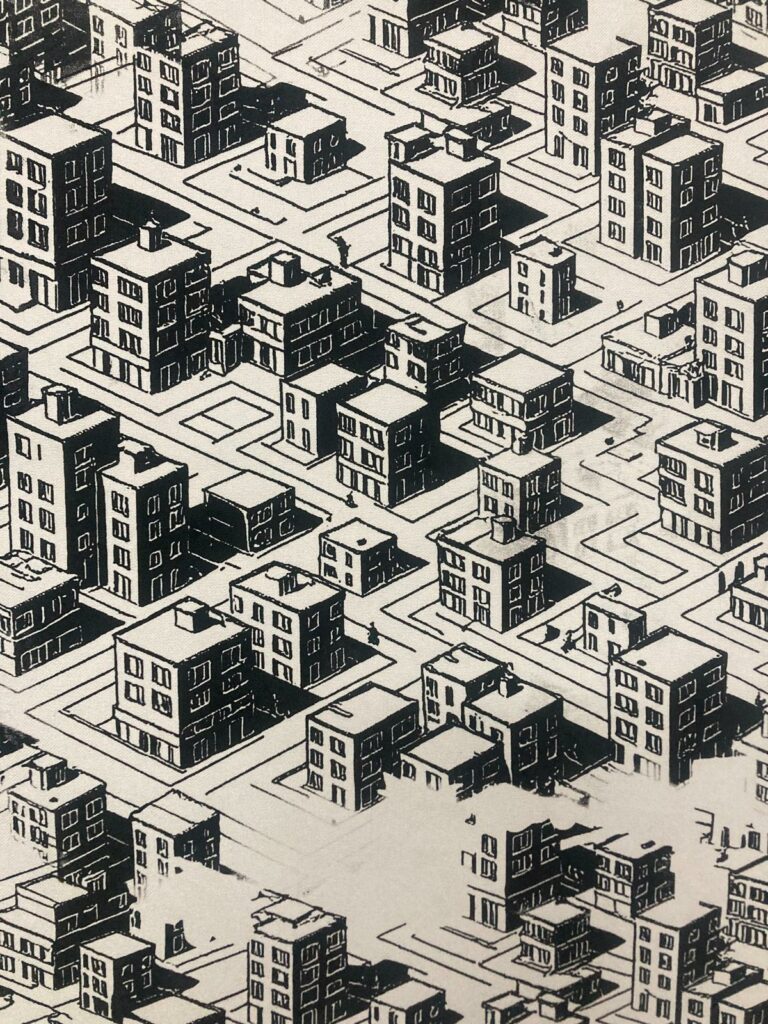
The exhibition continues with a new series of sculptural models that assemble fragments of a continuous peripheral city. Positioned midway between construction toys and the Architectons of Kazimir Malevich, these works present anonymous, repetitive, and functional buildings—shopping centers, hangars, blocks, and small apartment towers—that belong to no specific place. Hovering above these architectures is a “supreme” layer composed of advertisements, monumental structures, and slogan-bearing supports that convey vague promises, ambiguous hopes, or absurd prohibitions. Their sometimes humorous tone reveals an underlying will to control, whose apparent lightness proves unsettling.
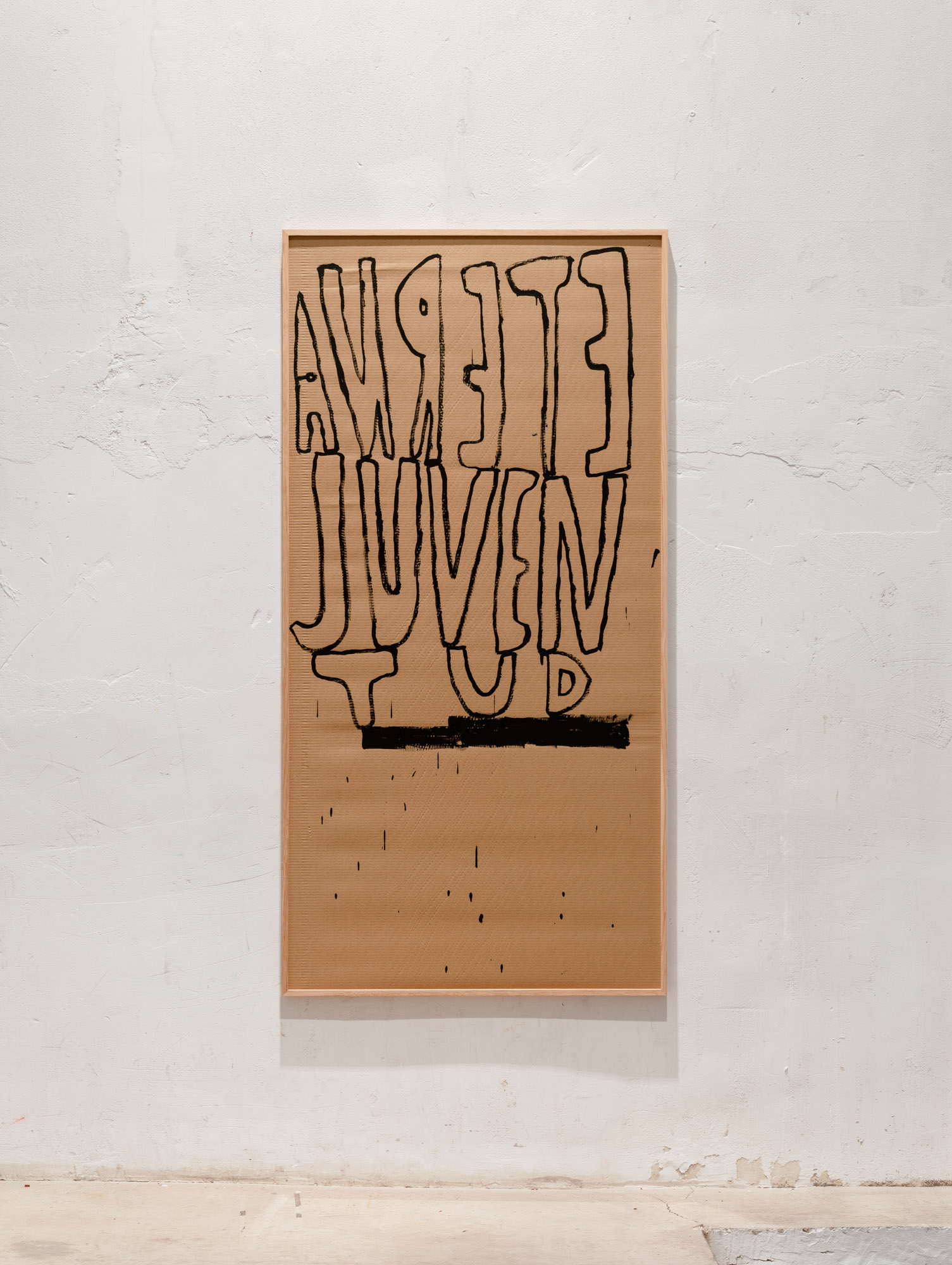
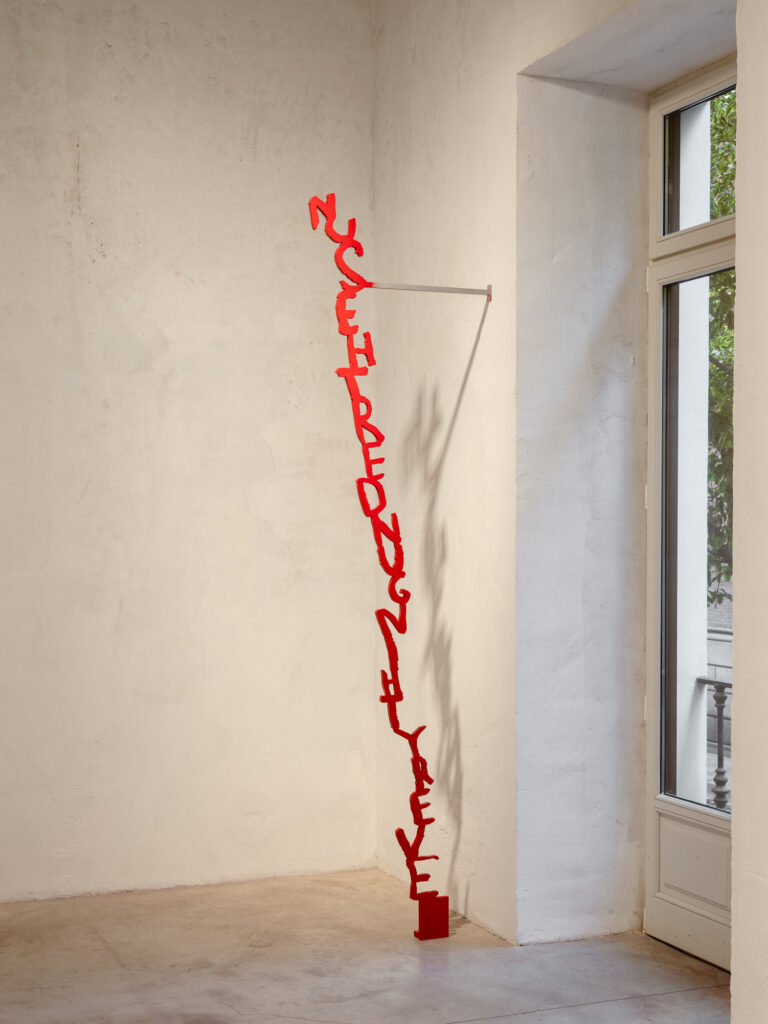
These slogans also infiltrate the exhibition space itself through texts that float across the gallery walls, in a series that references Spain’s tourism promotion abroad across different periods of recent history. Read from the present, these phrases generate new, poetically unexpected meanings, activating a critical distance between language, image, and the territory they claim to represent.
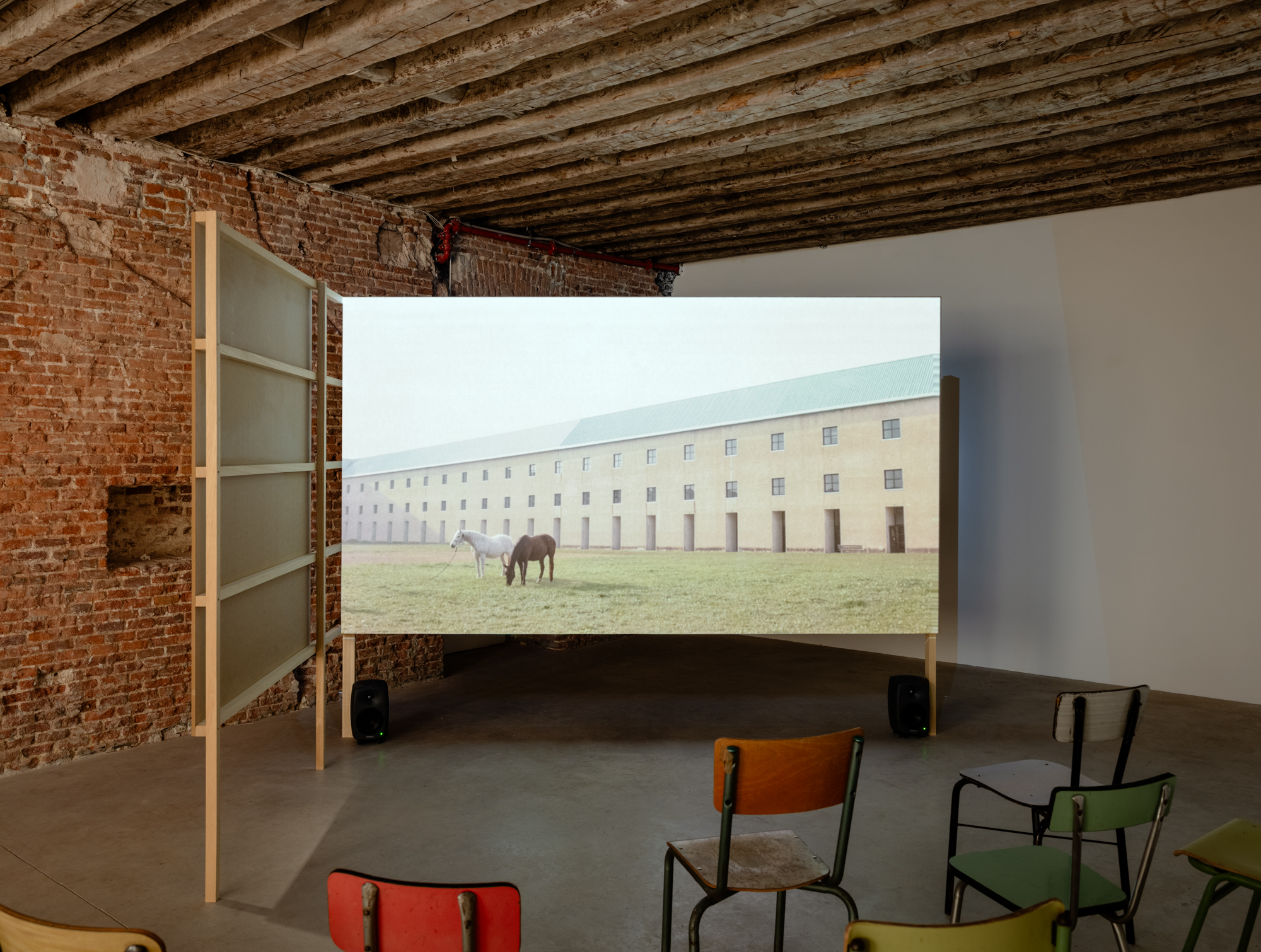
In contrast to these imaginary cities, the video Modena Parade documents an action carried out in the Italian city of Modena on March 27, 2022, in a post-pandemic context. Colomer proposed celebrating a festivity—a secular, participatory procession that moved through the city in the reverse direction of the routes experienced during months of lockdown. The action began at the metaphysical cemetery designed by Aldo Rossi and concluded in the Giardini Ducali, bringing together more than 500 participants, including civic collectives, primary schools, percussion and dance groups, and the music conservatory.
The procession functioned as a doubly cathartic gesture: on the one hand, the reclaiming of public space and the streets by those who had remained confined; on the other, the possibility of openly addressing death within a shared space, making its plural imaginaries visible. The video captures this collective gesture, transforming an ephemeral action into a reflection on the city as a site of ritual, encounter, and shared experience.