Dormir comme le soleil
May 12, 2026 – January 10, 2027
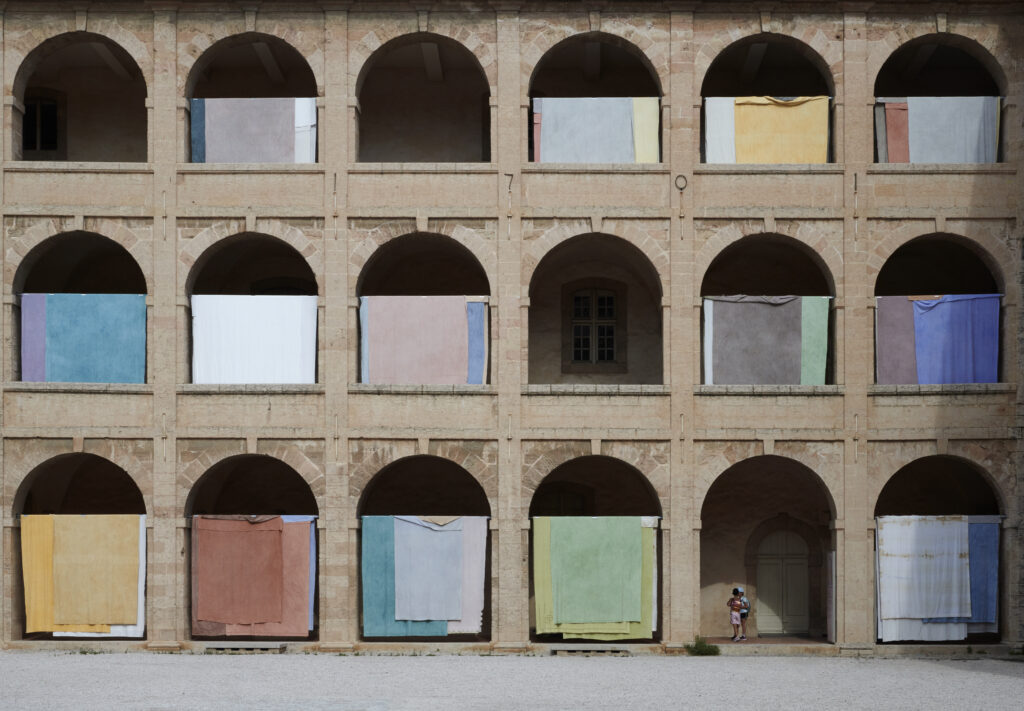
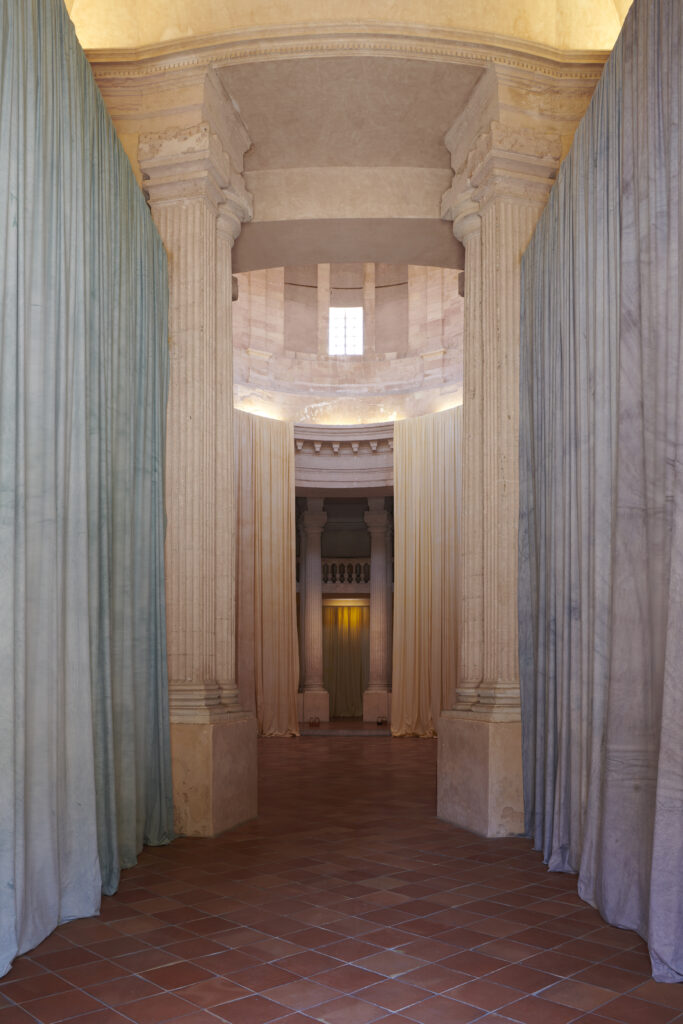
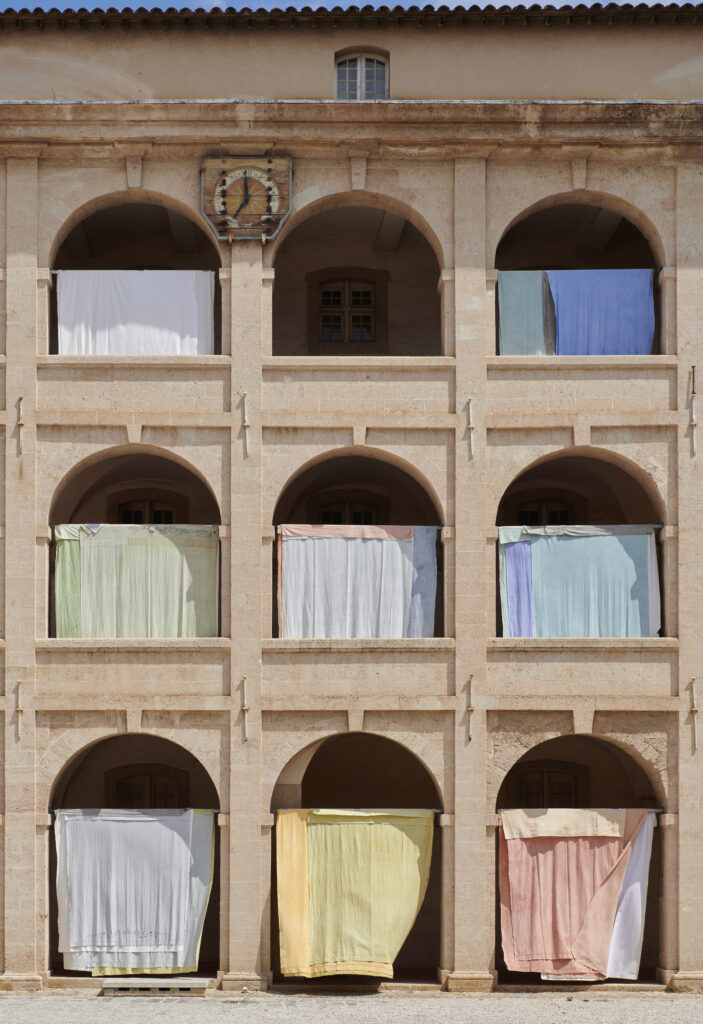
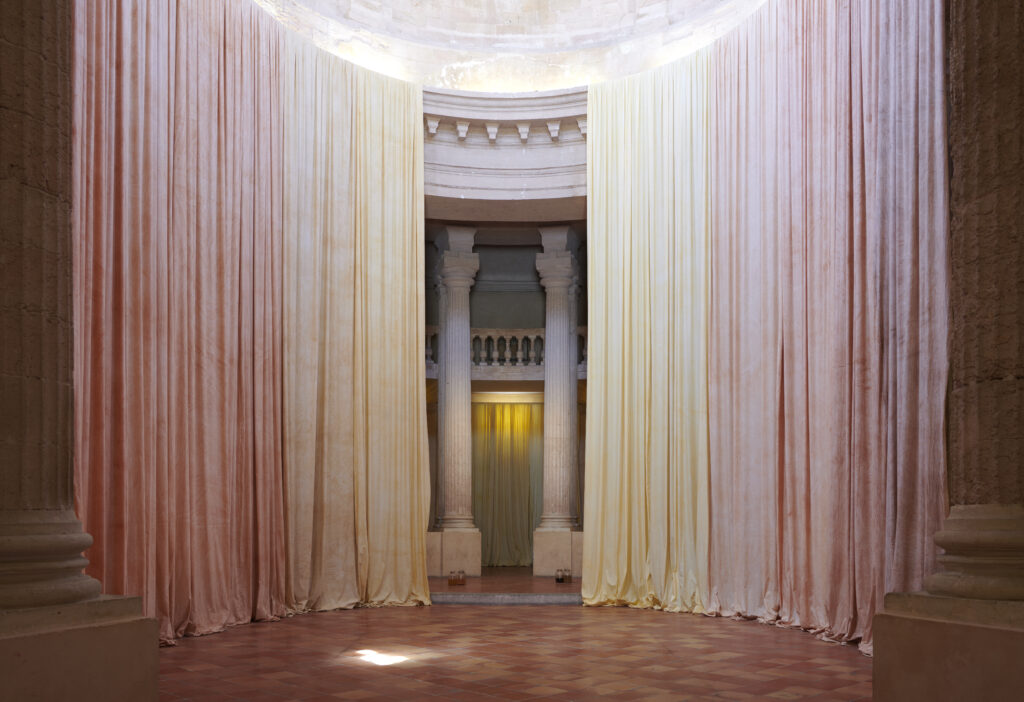
The exhibition brings together a new body of work by Adrien Vescovi conceived specifically for the Centre de la Vieille Charité in Marseille. Occupying both the chapel and the surrounding walkways of the former hospice, the project unfolds as a large-scale installation developed in direct dialogue with the architecture, history, and spatial rhythms of the site.
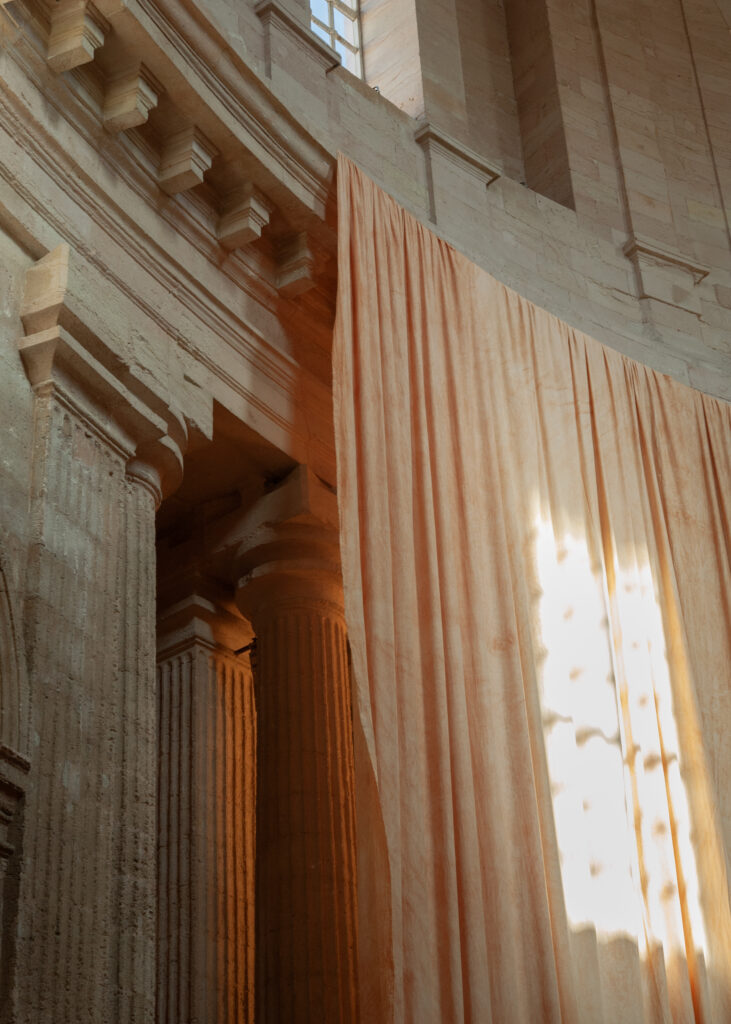
Conceived as an invitation to wander, the installation transforms the Vieille Charité into an environment of shifting perceptions. Extending across multiple levels of the building, the work establishes a continuous dialogue between the monument’s Mediterranean architecture and a practice deeply rooted in material transformation. Through the deployment of suspended textiles, chromatic interventions, and subtle spatial displacements, Vescovi activates the circulation of the visitor, encouraging an experience shaped by movement, duration, and attentive observation.
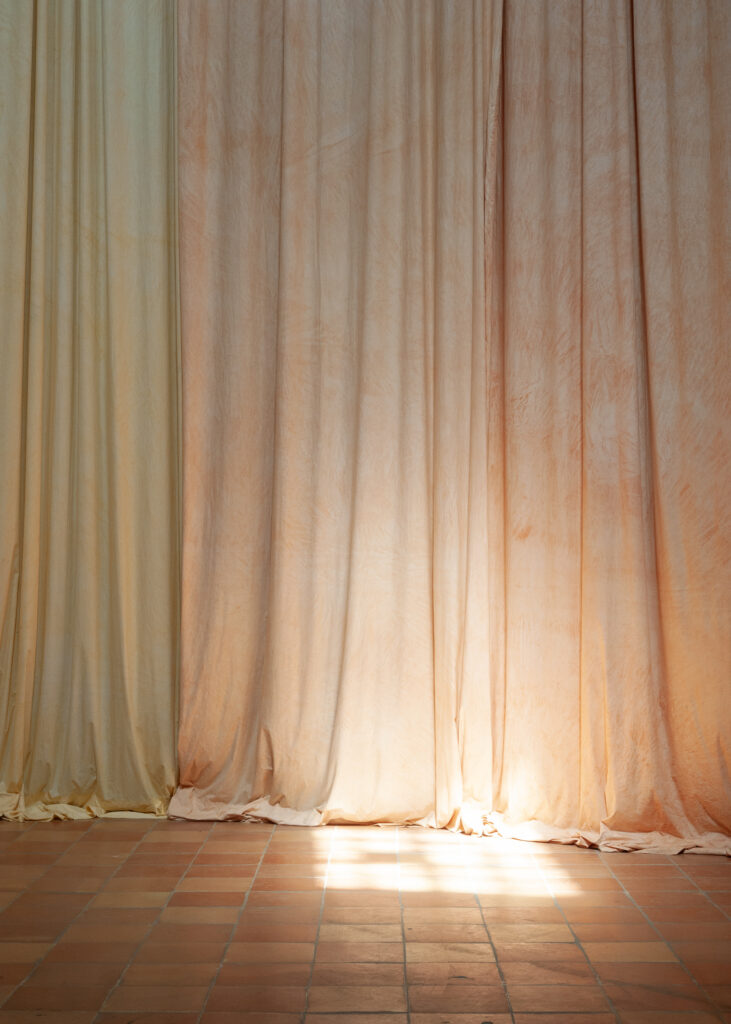
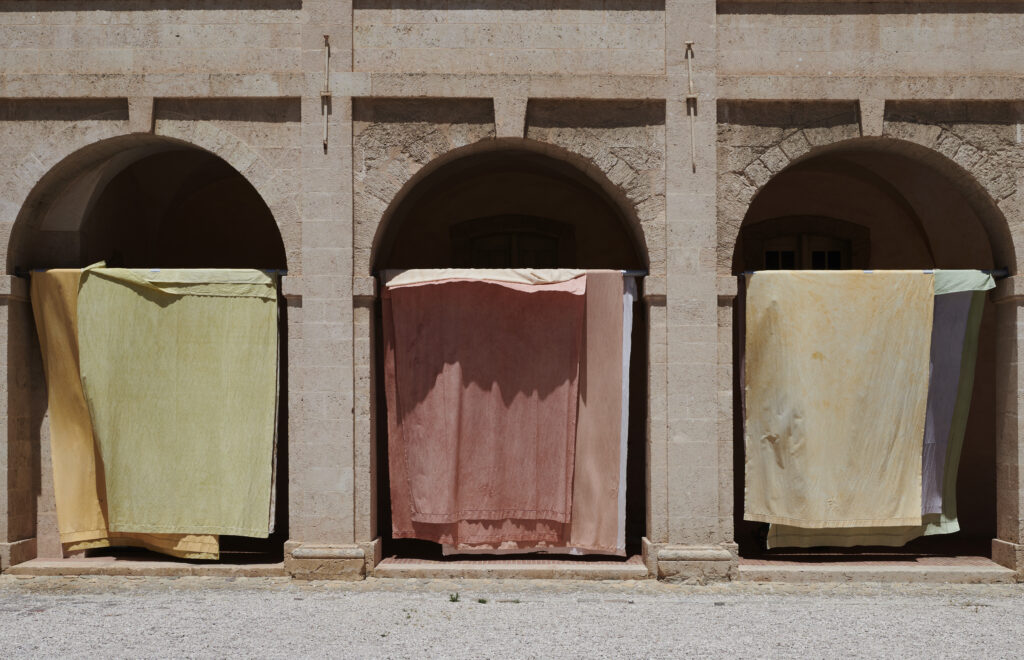
At the center of the artist’s practice lies an engagement with fabric, and more specifically with antique cloth. These materials function not simply as supports but as repositories of accumulated histories. Marked by use, exposure, and time, they retain traces of previous lives while remaining open to new processes of alteration. Sewing, dyeing, folding, and assembling become acts through which memory is neither preserved nor reconstructed, but continuously reactivated. Within Vescovi’s work, textile surfaces operate as sensitive archives in which personal, collective, and environmental histories coexist.
The exhibition places particular emphasis on the material processes through which the works are produced. Developed through protocols that combine plant macerations, natural pigments, ochres, exposure to sunlight, humidity, and atmospheric conditions, the textiles undergo gradual transformations that extend beyond the artist’s direct control. Rather than imposing predetermined outcomes, Vescovi conceives the work as the result of an open-ended negotiation between intention and circumstance. Air, light, pollution, and time itself become active participants in the formation of the image.
A second line of inquiry emerges through the artist’s sustained reflection on temporality. Influenced by notions of slowness as both an ethical and aesthetic position, Vescovi develops a practice based on prolonged observation and incremental change. His works resist the logic of immediacy, favoring instead processes that unfold over extended periods. In this context, color appears not as a fixed visual attribute but as a living material subject to continuous transformation. The resulting surfaces register duration, environmental conditions, and the passage of time as integral components of their meaning.
The dialogue established with the Vieille Charité further expands these concerns. Built in the seventeenth century as a place of refuge and assistance, the former hospice carries within its architecture multiple layers of social and historical memory. Rather than treating the building as a neutral exhibition space, Vescovi engages with its symbolic and material presence. The installation responds to the shifting shadows of the walkways, the monumentality of the chapel, and the rhythms of circulation that structure the visitor’s experience. Architecture becomes both a support and an active interlocutor, shaping the perception of the works while simultaneously being reinterpreted through them.
The exhibition also reflects the artist’s broader interest in an expanded understanding of painting. Moving beyond the conventional limits of the canvas, Vescovi conceives pictorial practice on the scale of landscapes, environments, and architectural spaces. Textile elements function as chromatic fields, spatial interventions, and performative traces of processes that remain visible within the finished work. Painting thus becomes inseparable from material transformation, environmental exposure, and spatial experience.
Through these interconnected bodies of work, the exhibition explores the relationships between memory, materiality, and duration. It examines how objects absorb histories, how environments leave their marks upon matter, and how artistic practices can reveal forms of knowledge embedded within everyday materials. Between architecture and textile, permanence and transformation, presence and disappearance, Vescovi’s installation proposes a space in which memory is encountered not as a fixed narrative but as a continuous process of becoming.
The project ultimately invites viewers to experience the discreet vibration of time inscribed within the fibers of the world. Through an economy of means and an attention to processes of slow transformation, the exhibition reflects on the ways in which matter records experience, preserving traces of human gestures, environmental conditions, and historical passage. In the encounter between textile, architecture, and light, memory emerges not as representation but as a living and continually unfolding presence.