Les Mangeurs d’étoiles
June 4 – July 18, 2026
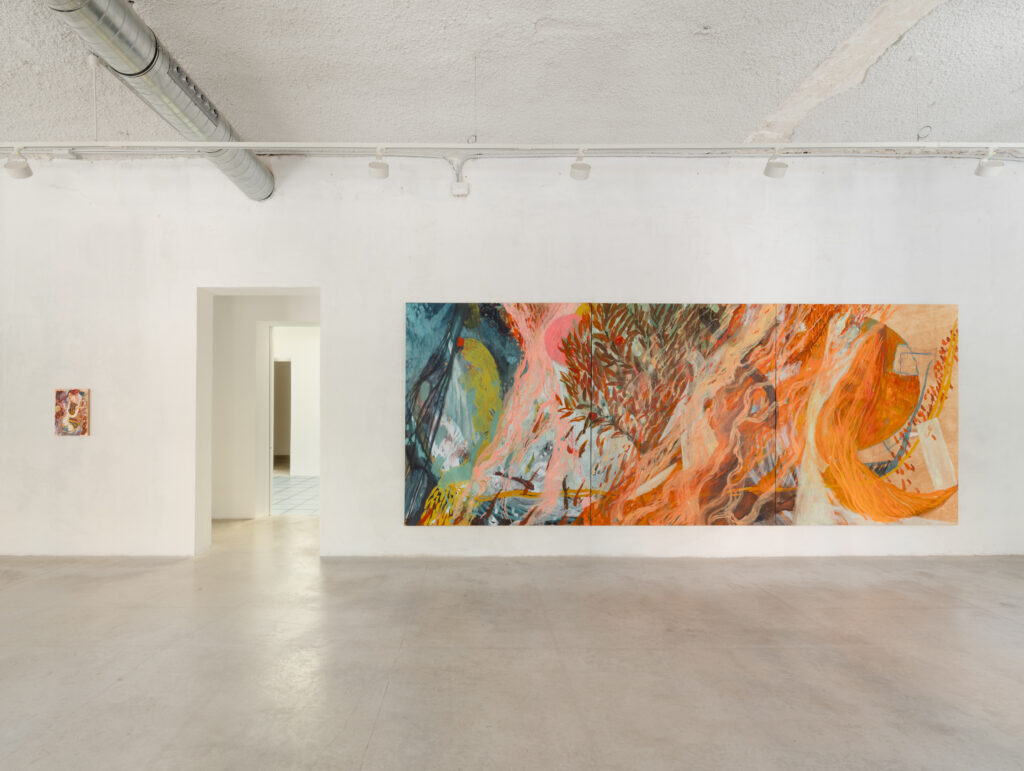
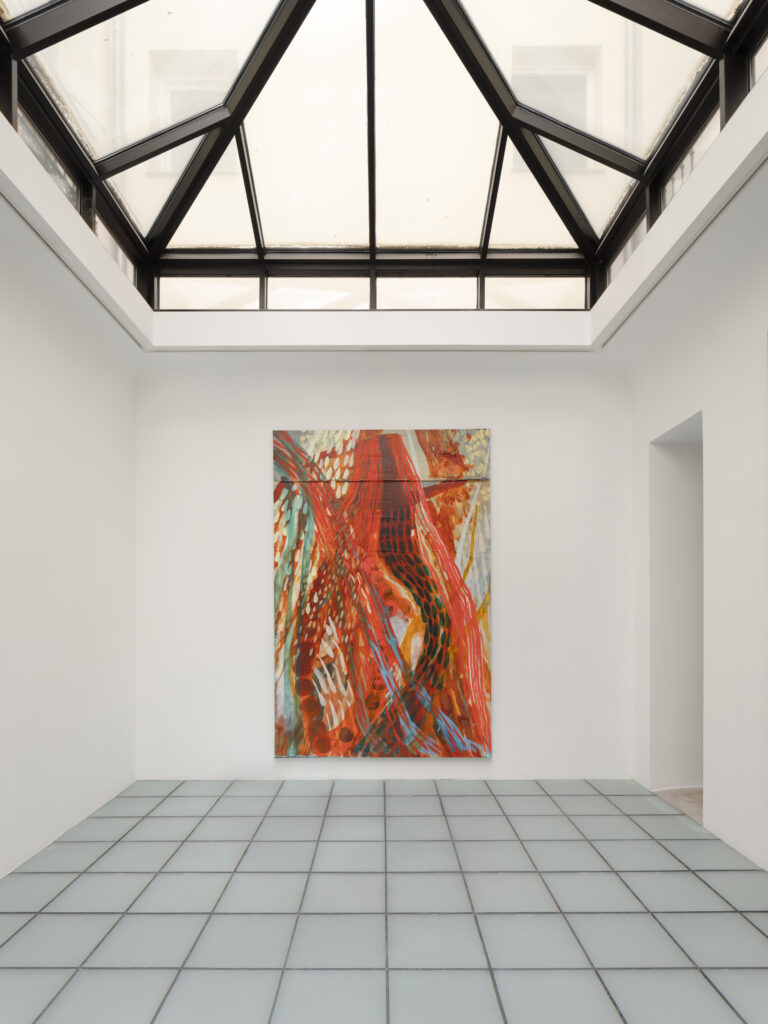
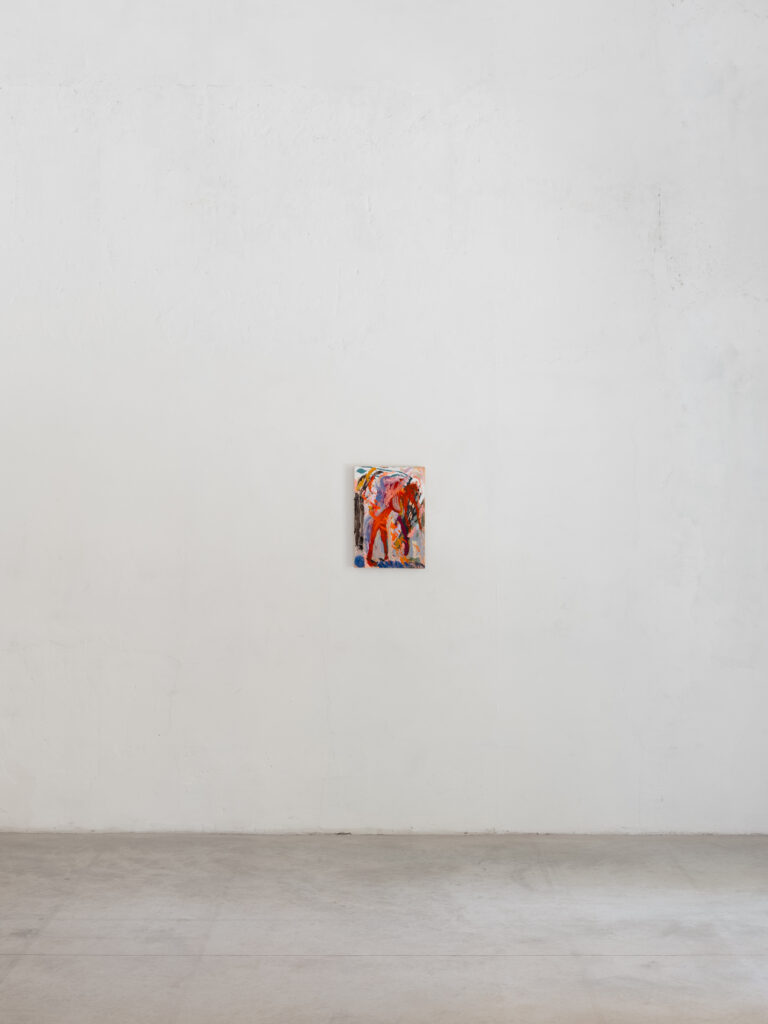
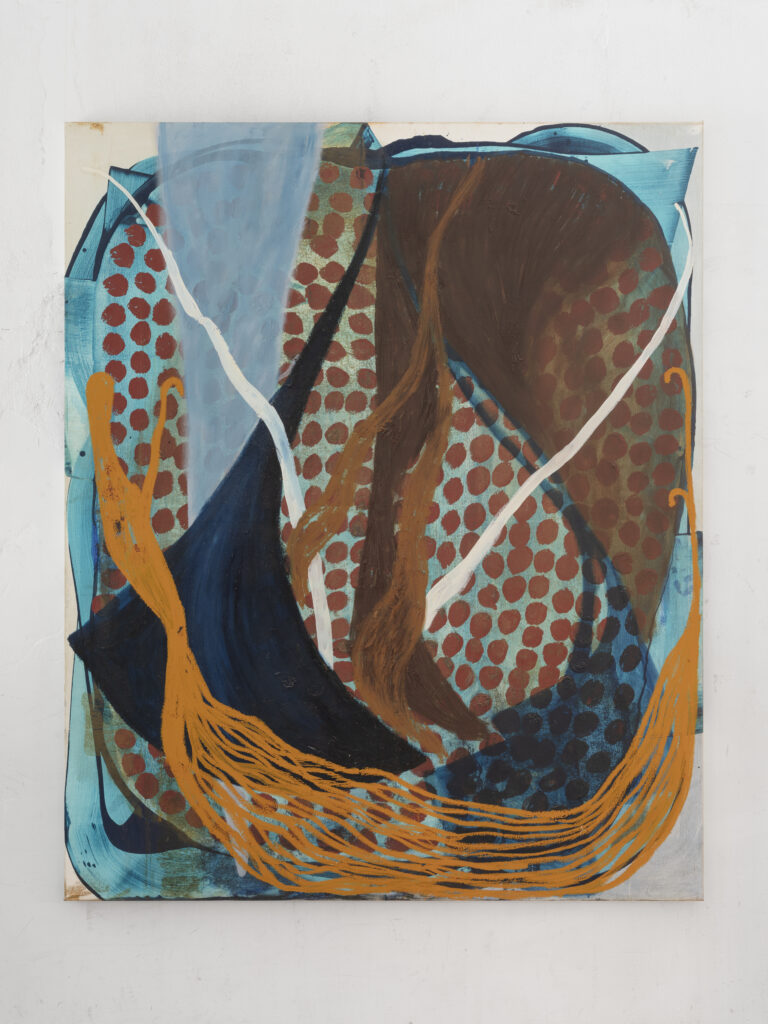
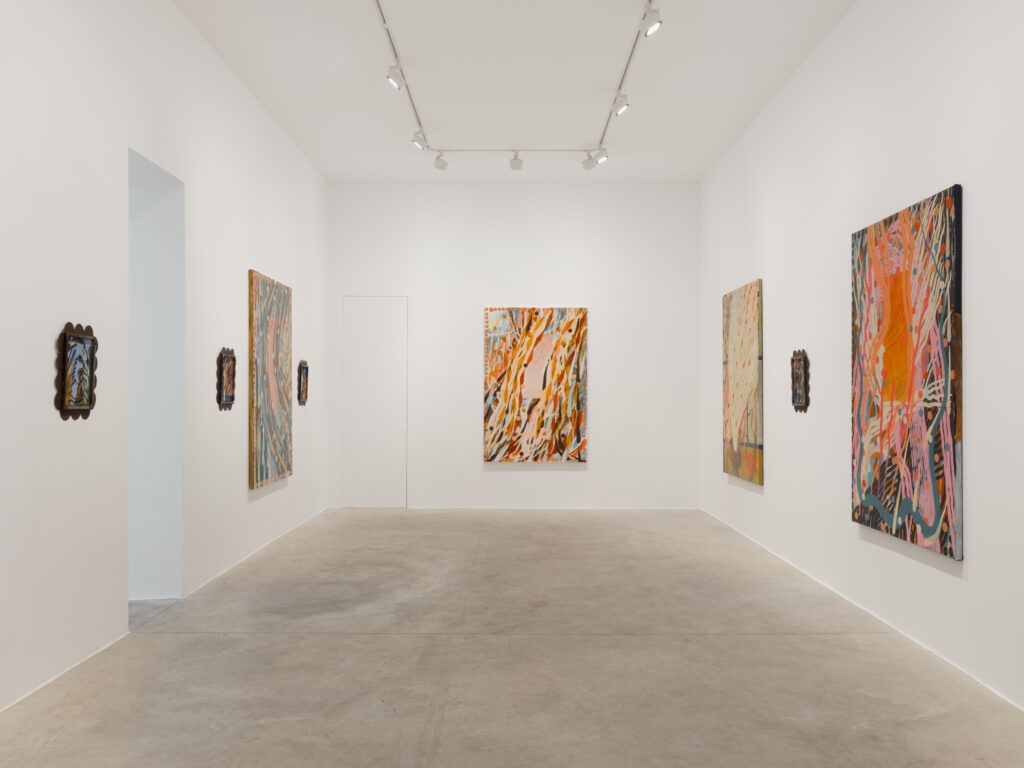
Albarrán Bourdais presents Les Mangeurs d’étoiles, Jeremy Demester’s first exhibition with the gallery. Bringing together paintings, drawings and design focused objects, the exhibition unfolds through a body of work shaped by the contemplation and absorption of cosmic forces, with the intent to embrace the mystery and the rhythm of the cosmos. The title of the exhibition refers to Romain Gary’s eponymous novel ‘The Star Eaters’, weaving a story blending adventure, poetry, and reflections on the peoples’ destiny. The exhibition invites viewers to engage through intuition, perception, and sensory experience.
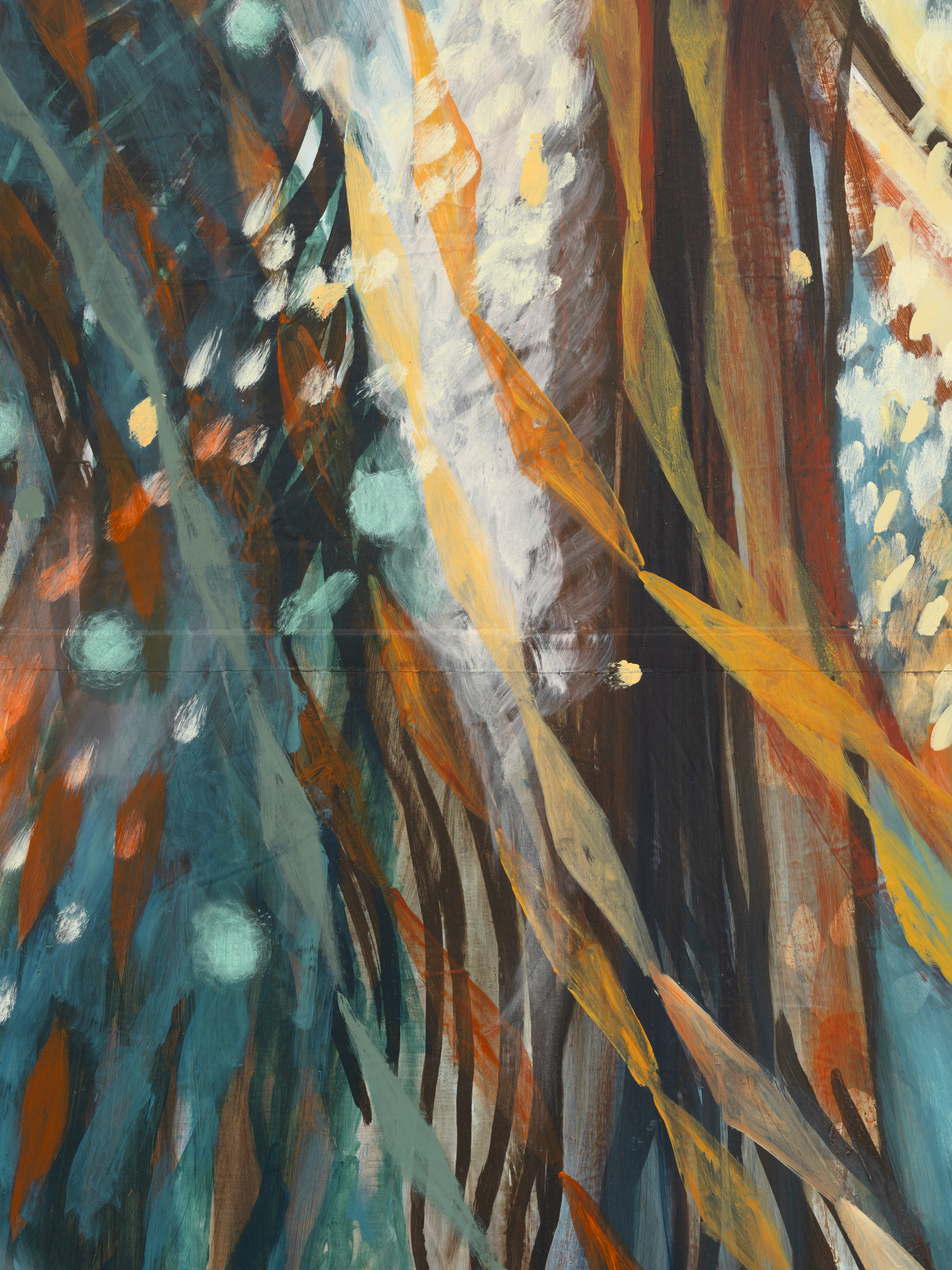
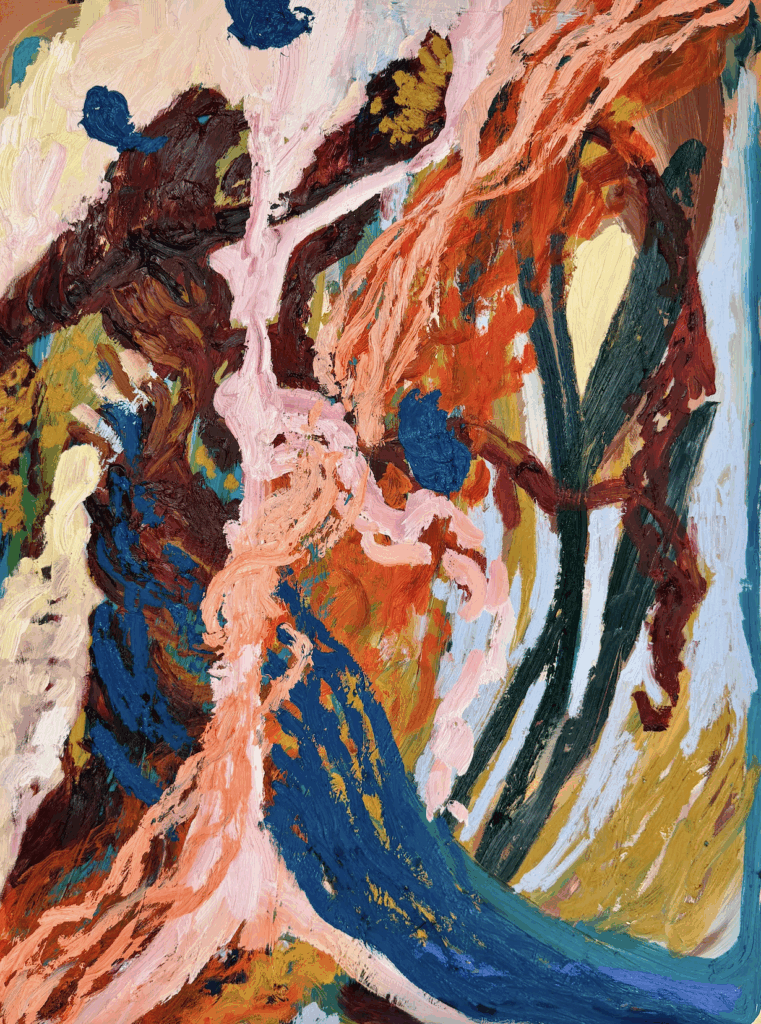
Demester’s practice is built upon a deeply intuitive approach to painting. Marked by gesture, rhythm, and the layering of images, his works oscillate between abstraction and figuration, constructing scenes in which bodies, symbols, landscapes, and organic forms appear fragmented, suspended, or in the process of transformation. His images arise from free associations, memories, spiritual references, and states of perception that expand painting toward the territory of vision and ritual. As a descendant of the nomadic Romani community and long-term resident of Ouidah in Benin, Demester draws equally on West African Vodun, ancient mythologies, and a deeply personal built visual language in which different cultural imaginaries continuously merge and transform.
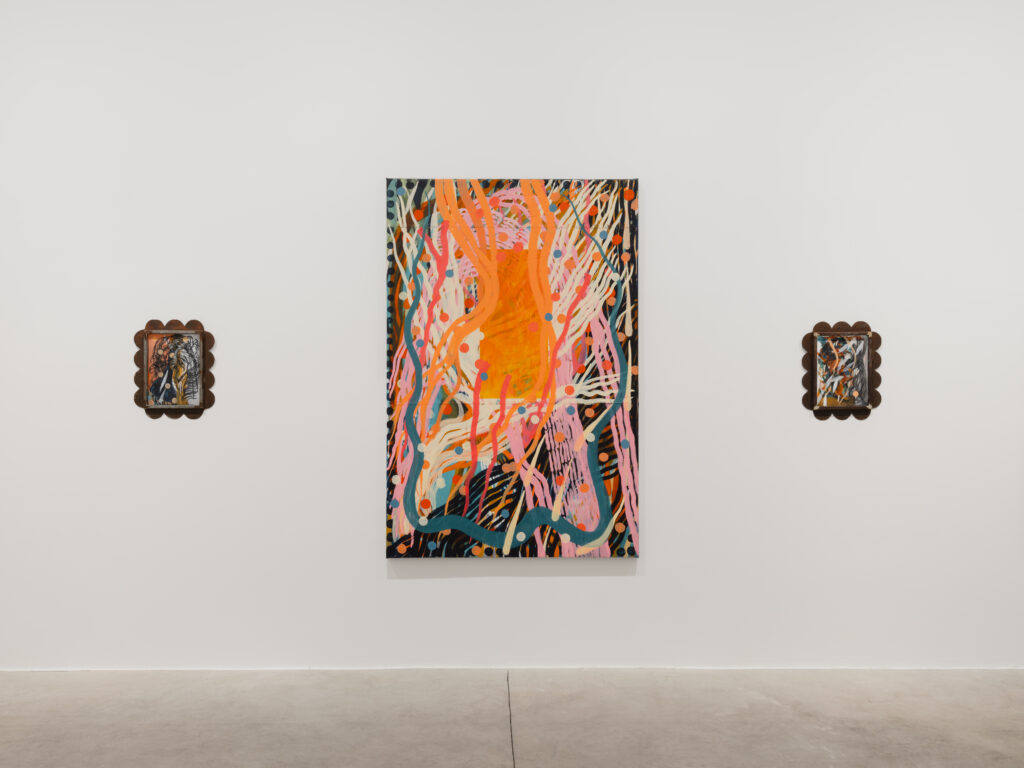
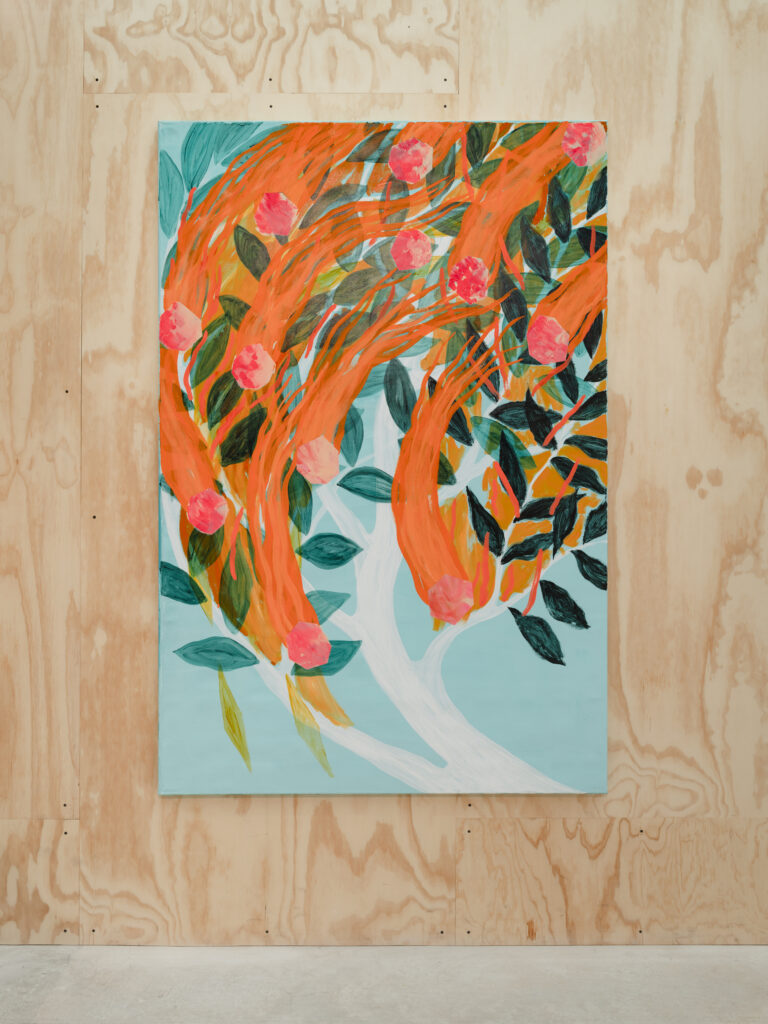
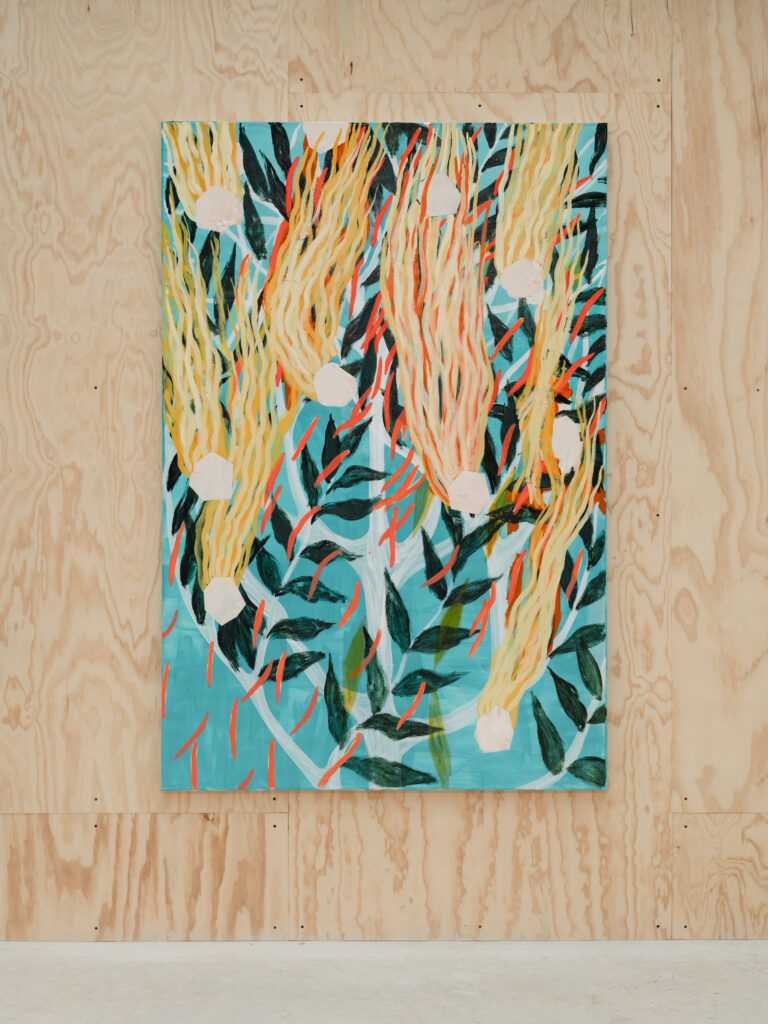
The exhibition brings together a constellation of distinct yet interconnected works. Among them, the Asterastre paintings depict stars as the fruits of the universe, drawing on Werner Herzog’s documentary Fireball: Visitors from Darker Worlds and the conviction that meteorites carry meaning humanity must decipher. The Entoptic drawings reference David Lewis-Williams’ research linking prehistoric art to altered states of consciousness: during trance, the mind first perceives geometric patterns generated by the brain, then interprets them through cultural symbols into rich visionary experience.
Throughout the exhibition, the Tarot de Marseille – particularly the Major Arcana – intersects with West African Vodun symbolism. The Tarots à la Calebasse and Tarots au Candélabre are initiatory paintings that link the Tarot’s archetypes with Vodun imagery, exploring what Idries Shah described as the same currents of thought occupying the human mind across communities belonging to entirely different worlds. The Fool (Le Mat) and The Star (L’Étoile, Arcane XVII), read through Alejandro Jodorowsky’s interpretations, run as invisible threads through the pictorial space: figures of trance, cosmic receptivity, and pure action in the eternal present.
Literature and cinema inform the exhibition’s conceptual tissue. Fragments of a Paradise takes its title from Jean Giono’s fantastical short story and from Leonardo da Vinci’s Annunciation, a painting the artist describes as having made him “stagger in place”. La Chimera references Alice Rohrwacher’s 2023 film of the same name, while Bather by the Stream calls back to Matisse’s Bathers by a River. Notre Dame des Hirondelles is suspended from a line by Marguerite Yourcenar: “And Marie went away along the path that led nowhere, a woman to whom it mattered little that paths come to an end, for she knew the way to walk in the sky.” These references do not appear as illustrations of specific narratives; Demester absorbs them into a unified visual language where everyday, mythical, intimate and cosmic remain in constant dialogue.
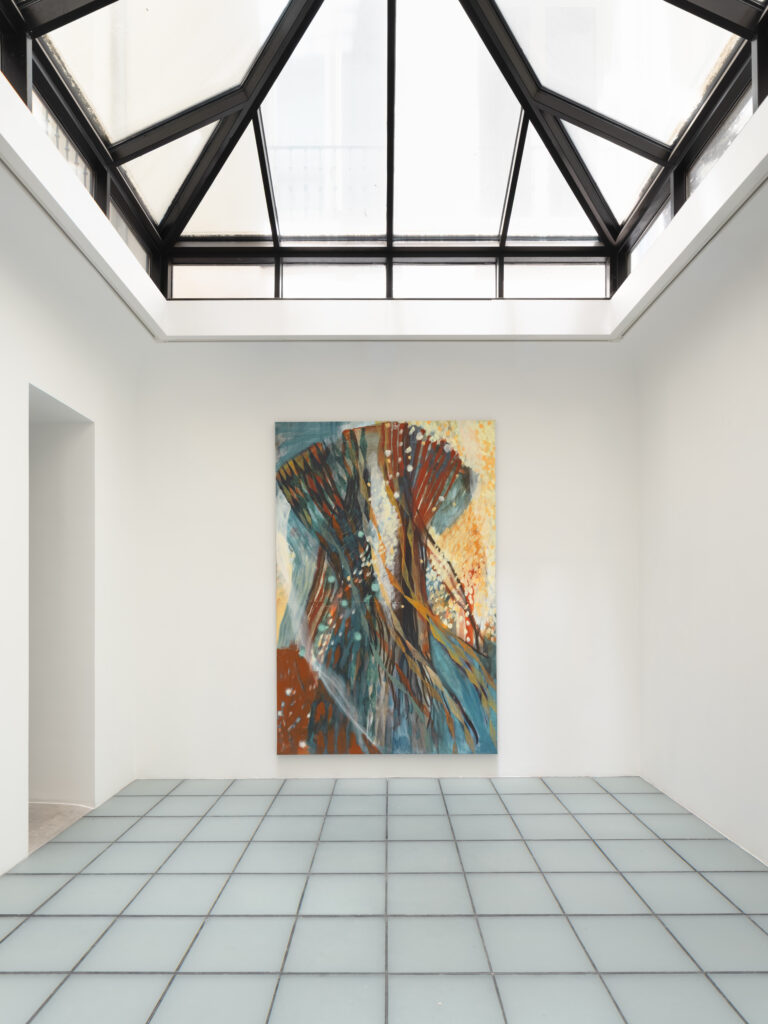
The exhibition’s title derives from Romain Gary’s novel, in which the devil does not exist and no one will buy your soul, yet each of us is connected to a star. In Gary’s book, Native American characters function as mediators between the human world and the spirit world, embodying an ancient knowledge and a sacred relationship with the cosmos. That same dimension permeates Demester’s practice, where stars operate as symbols of transformation, knowledge, and connection to that which lies beyond the visible. The three large-scale paintings that anchor the exhibition directly resonate with Gary’s universe.
Far from offering a linear narrative, Les Mangeurs d’étoiles unfolds as an open system of visual and conceptual resonances. Each work functions as an autonomous fragment that, through its relationship with the others, progressively expands the universe of the exhibition.